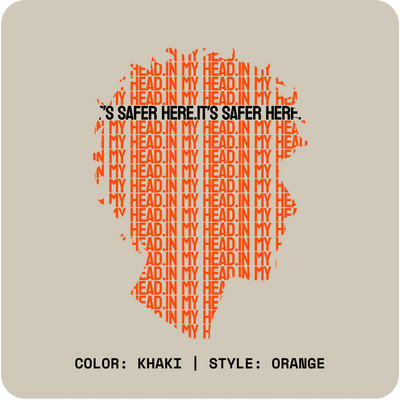
For the ones waiting to be found out.
For the ones who got the job, the grade, the room, the seat at the table — and have been holding their breath ever since.
For the ones who built something real and still can't fully believe it's theirs.
What Imposter Syndrome Actually Is
Imposter syndrome is the persistent internal experience of believing you don't deserve your achievements — that you've fooled people into thinking you're more capable than you are, and that it's only a matter of time before they figure it out.
It was first described in 1978 by psychologists Pauline Clance and Suzanne Imes, who initially documented it in high-achieving women. Since then, research has found it across genders, industries, and demographics. Estimates suggest roughly 70% of people experience it at some point.
Which means the feeling that you're uniquely fraudulent is itself one of the most common human experiences.
What It Actually Feels Like
Not always loud. Often it runs quiet, in the background, as a low-grade readiness to be exposed.
You do good work and attribute it to luck. You receive praise and find reasons to discount it — they don't have the full picture, they're being kind, they'd think differently if they knew more. You prepare more than you need to because preparation feels like the only thing standing between you and the moment they realize you don't belong here.
When you succeed, the credit goes somewhere else — timing, other people, circumstances. When you fail, it confirms what you already believed: that you were never really qualified.
The success doesn't accumulate. The doubt does.
Who Feels It Most
Here's the part worth sitting with: imposter syndrome tends to be most intense in people who have worked hardest to get somewhere.
People who arrived in rooms they weren't expected to be in. People who built their way in without the network, the background, the head start others had. People who had to prove themselves on longer odds — and kept proving themselves, and still couldn't close the gap between external evidence and internal belief.
The people who feel most like impostors are frequently the ones who earned it most — precisely because they know what the earning actually cost. They have no illusions about the work. They remember every moment of doubt, every near-miss, every time someone underestimated them. The credential and the doubt coexist, and the credential doesn't cancel the doubt.
What It's Not
It's not humility.
Humility is an accurate assessment of your limitations alongside your strengths. Imposter syndrome is a distorted one — systematically discounting the evidence that you belong while amplifying the evidence that you don't.
It's also not useful caution. And it's not a character trait that means you're genuinely unqualified. The people who are genuinely unqualified rarely experience imposter syndrome. That's the cruelest irony: the feeling of being a fraud is most common in the people who aren't.
What 'Not a Statistic' Means Here
Imposter syndrome is often statistical in nature. You know what the odds were. You know how many people from your background, your zip code, your circumstances, end up in this room. You made it through a filter that was calibrated against you.
And somewhere in you, there's a voice that decided the explanation is luck rather than the more accurate one: that the odds were wrong. That the filter was miscalibrated. That what you had was enough — more than enough — and the system just wasn't built to recognize it early.
You're not a statistic. You're the reason statistics don't tell the whole story.
What Tends to Help
Not affirmations. Not telling yourself you're great until you believe it.
What tends to actually help: externalizing the evidence. Keeping a record of specific things you did, decided, built — not to brag, but to have something that exists outside the internal narrative to compare to when the narrative runs loud.
Talking to other people who experience it. Because hearing someone you respect describe the same internal experience dismantles the uniqueness of it. The fraudulence you feel isn't evidence of fraudulence. It's evidence of awareness.
And separating the feeling from the fact. The feeling of being about to be found out is real. The imminence of being found out — when you've done the work, when you've earned the seat — usually isn't.
For the ones who've been waiting for internal certainty to match external achievement — that certainty may not come the way you're expecting. The seat is yours regardless.
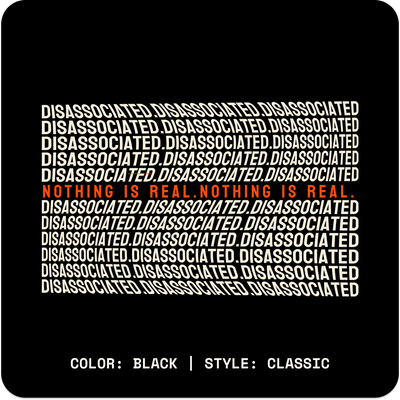
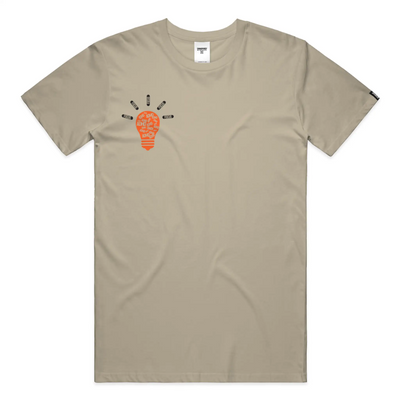
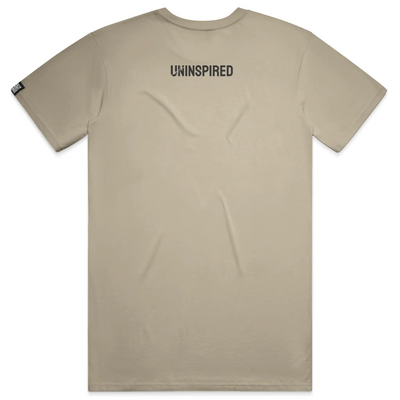
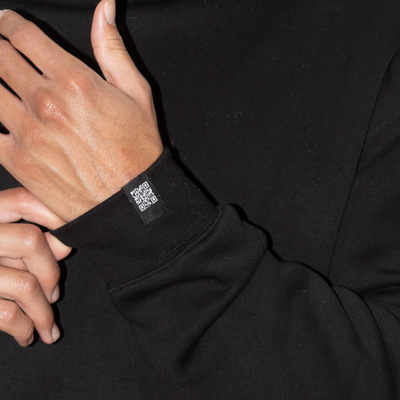
UNINSPIRED makes clothing for the ones who aren't a statistic. The Not a Statistic hoodie says what you've always known. Scan the sleeve.