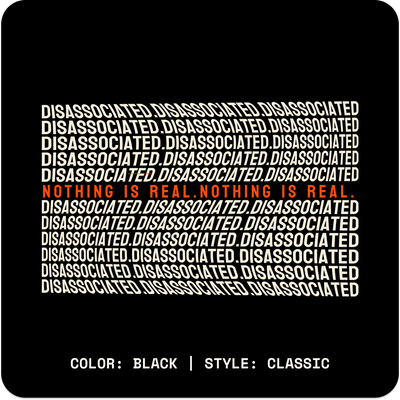
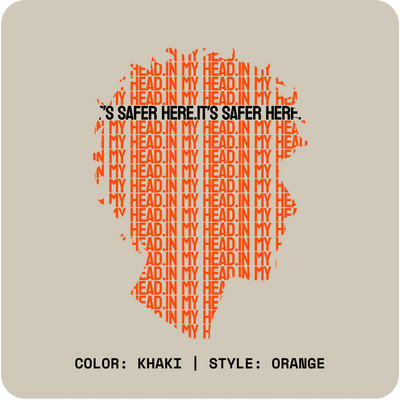
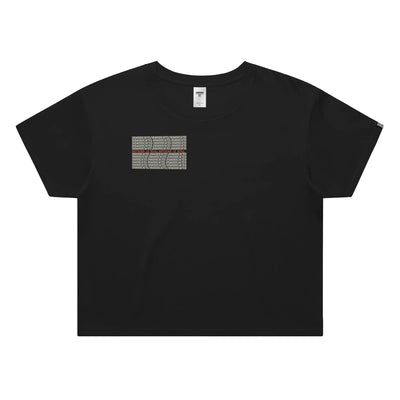
For the ones who kept going when they had nothing left to give — and kept going anyway.
For the ones who don't feel sad, exactly. Just empty. Flattened. Done.
For the ones who can't explain why they're so tired when nothing particularly hard happened today.
What Emotional Exhaustion Actually Is
Not weakness. Not drama. Not a sign you can't handle your life. Emotional exhaustion is what happens when the emotional labor you've been doing — for yourself, for others, for survival — finally exceeds the resources available to do it. The tank runs out. What's left isn't sadness or anger or grief specifically. It's a kind of flatness. A depletion that sits underneath everything.
Burnout gets talked about in professional contexts, and emotional exhaustion is related — but it's broader. It doesn't require a demanding job. It doesn't require anything dramatic at all. It accumulates quietly, through sustained effort across too many fronts with too little recovery. The person managing their own mental health, the relationships around them, the demands of daily functioning, and the performance of being fine while doing all of it. Eventually, that sum is just too much.
The research on emotional exhaustion shows it's associated with depersonalization — a sense of detachment from yourself and your life — reduced effectiveness, and a creeping numbness that makes things that used to matter feel unreachable. It's not depression, exactly, though the two can coexist. It's more like the system throttling itself because there isn't enough left to run at full capacity.
What It Actually Feels Like
Numbness where there should be feeling. Caring about things that used to matter feels effortful in a way it didn't before. You go through the motions of your life. You do the tasks. You show up. But the thing underneath that used to animate it — the interest, the investment, the care — is quieter than it used to be. Or gone entirely.
Physical symptoms that don't have a clear physical cause. Exhaustion that sleep doesn't fix. Headaches. A heaviness that lives in your chest or behind your eyes. Your body is giving you the information your mind has been trying to ignore.
Irritability. The emotional buffer you normally run is gone. Things that used to roll off you now catch. Small frustrations hit differently. The threshold is just lower — because the reserves that would normally absorb them aren't there.
Difficulty doing things that should be simple. Decisions that would normally be easy feel heavy. Social interactions that used to be fine feel like too much. The cognitive and emotional bandwidth required for basic functioning is just... reduced. Because you've been spending it for a long time without rest.
The Invisible Labor Problem
Emotional exhaustion often builds in people who are doing work that doesn't register as work. The work of managing relationships. The work of monitoring how other people are feeling and adjusting accordingly. The work of holding space for others. The work of appearing okay when you're not, in environments that require it.
This labor is real. It costs something. But because it's not visible — because it doesn't appear on a job description or a to-do list — it doesn't get counted as load. Which means it doesn't get counted as something that needs rest and recovery. And the depletion builds in the background, unacknowledged, until it's too large to keep ignoring.
People who are high-functioning, highly conscientious, or who carry relational and emotional responsibility in their families and social circles are especially vulnerable. The capacity is large enough that the decline goes unnoticed for a long time. But large capacity just means a larger fall when the floor finally drops.
Why Rest Doesn't Always Fix It
One of the confusing things about emotional exhaustion: rest doesn't always work the way you expect it to. A week off. A good night's sleep. A vacation. And you come back still feeling the same flatness, the same depletion.
Because rest from activity isn't the same as rest from the emotional work. If the thing that's draining you is the relational labor, the performance of fine, the suppression of what you're actually feeling — stepping away from tasks doesn't address that. The drain continues.
What helps is different: reducing the emotional labor load. Lowering the performance requirement. Having spaces where you don't have to manage your presentation, where you don't have to hold space for others, where you can simply be the level of depleted you actually are without it costing anything more.
That kind of rest is harder to find. And harder to give yourself permission to have, especially when you've been defined by how much you can carry.
What Emotional Exhaustion Is Telling You
Not that you're weak. Not that you're broken. Not that you can't handle your life.
That the ratio is off. That you've been giving out more than you've been taking in for longer than you should have. That somewhere along the way you stopped being included in your own list of things to care for. That the standard you hold yourself to — productive, functional, available, performing fine — has no off-switch built into it, and the cost of that is landing now.
Emotional exhaustion is information. Inconvenient, uncomfortable, undeniable information. The question isn't how to push through it. The question is what it's pointing to that needs to change.
UNINSPIRED makes clothing for the ones who've been holding it together so long they've forgotten what it feels like to put it down. The Caffeine & Coping collection is for the ones getting through on whatever's left. Scan the sleeve.