For the ones who know they should be feeling something and aren't.
For the ones who got the good news and felt nothing. Who watched something sad and stayed dry. Who looked at their own life from a slight remove and couldn't locate the feeling that should be there.
For the ones who've been calling it fine because they don't have a better word yet.
What Emotional Blunting Is
Emotional blunting is a reduction in the intensity of emotional experience. Not a specific emotion — not just sadness or joy — but emotion itself, arriving at lower volume than it should.
The world is still happening. Events occur. Things that should generate a response generate a muted one, or none at all. The feeling is there in the architecture of the moment — this is the kind of thing that should matter, you know that — but it doesn't land the way it would if the system were running normally.
This is different from being calm. Different from being okay. Calm is the absence of disturbance from a place of equilibrium. Emotional blunting is the absence of feeling from a place of disconnection.
What It Actually Feels Like
Most people describe it as a kind of cotton wool. A layer between them and what's happening. Things reach them, but slowly, distantly, like they're arriving slightly late and slightly quieter than they should.
The specific experience varies:
Good things don't land. Someone tells you something genuinely exciting and you produce the appropriate response because you know you should, but the actual feeling isn't there. You watch yourself being happy from a small distance.
Sad things don't land either. A loss, a disappointment, something that should hurt — and instead there's just a flatness. Not stoicism. Flatness. The awareness that this should hurt more than it does.
Neutral things are all that's left. The daily texture of existence without the emotional variation that usually gives it meaning and shape. Everything at roughly the same low level of feeling.
Why It Happens
Emotional blunting is a protective mechanism that becomes a chronic state. It shows up most commonly in:
Depression. Contrary to the cultural image, depression isn't always characterized by intense sadness. For a lot of people, it's characterized by this — the absence. The flatness. The inability to feel the things that used to be accessible.
Antidepressant side effects. SSRIs and SNRIs, particularly at higher doses, are associated with emotional blunting in a significant proportion of people who take them. The mechanism that reduces the low end can also reduce the high end. The medication may lift the floor of how bad things feel while also lowering the ceiling of how good things feel.
Trauma responses. Emotional numbing is one of the core features of dissociation and PTSD — the nervous system learning to reduce input volume in situations it has categorized as overwhelming. When that pattern becomes habitual, the numbing extends beyond the original context.
Chronic stress and burnout. Sustained high load depletes the emotional resources available. The feelings don't stop existing; they just stop being accessible, because the system doesn't have the capacity to process them.
The Difference Between Numb and Fine
Fine has a texture. It's the absence of disturbance from a baseline of relative equilibrium. Things feel approximately like their actual size. When something good happens, you feel it. When something hard happens, you feel that too. The emotional range is intact, just not activated.
Numb doesn't have texture. It's the same low register across everything. The good news and the bad news arrive at similar flatness. The range isn't just unactivated — it's inaccessible.
The distinction matters because people who are emotionally blunted often describe themselves as fine, because they're not actively in distress. But the absence of distress isn't the same as presence of okay. Numb isn't a destination. It's a signal.
What Makes It Harder
Emotional blunting is invisible from the outside. You look fine. You function. The absence of visible distress reads, to everyone around you, as stability or even wellness.
Which means you're often in a situation where the people around you think you're doing better than you have in a while, exactly when you're the most disconnected from your own experience. The gap between how you're perceived and what's actually happening is at its widest.
And it's hard to name, because the language for mental health distress is largely the language of intensity — anxiety, depression, anger, grief. Emotional blunting isn't intensity. It's the absence of it. The vocabulary for that is thinner, which means people carry it without knowing what to call it for longer than they should.
For the ones who have been fine in the way that means nothing is reaching them — numb is not the same as okay. The feeling will be there when the system has the capacity for it again. The absence of feeling right now is information, not a destination.
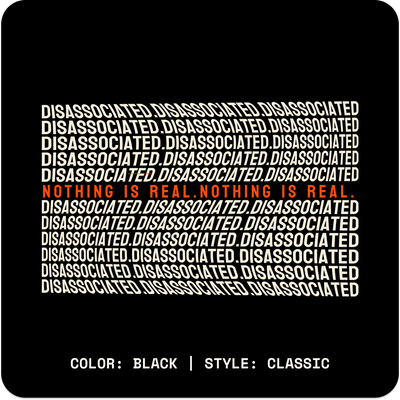
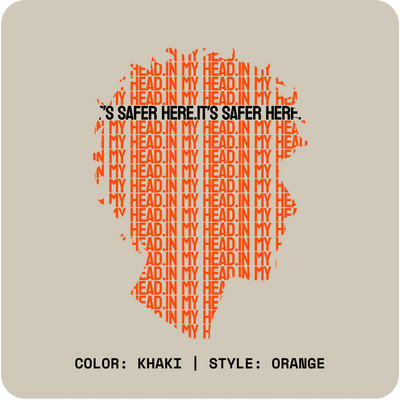
UNINSPIRED makes clothing for the ones who live somewhere between present and not-quite. The Disassociated hoodie and the I'm Fine hoodie wear the thing most people don't have a word for. Scan the sleeve.