For the ones who have a pattern they can't explain and don't know where it came from.
For the ones who react before they've had time to think and don't recognize themselves in the reaction.
For the ones who wonder why the past keeps showing up in the present.
What a trauma response actually is
A trauma response is an automatic, often involuntary reaction that the nervous system has learned to produce in response to perceived threat — where "perceived" means the nervous system's assessment, which may or may not match the actual level of danger in the current situation.
The operative word is "learned." Trauma responses are adaptive: they developed in response to real experiences where a particular kind of reaction was necessary or useful. The nervous system stored that reaction as the appropriate response to that class of situation. The problem is that the nervous system's classification system is imprecise — it tags situations by similarity to the original, and those similarities can be broad, subtle, or sensory rather than logical.
So the response fires in situations that share features with the original but aren't actually the same threat. The present-tense situation, evaluated through the nervous system's pattern-matching, triggers a response designed for the past. The reaction feels appropriate from the inside and disproportionate or confusing from the outside.
Fight: the response that looks like anger
The fight response activates in response to perceived threat with aggression — with a push back, a challenge, an escalation. In acute threat, this makes sense: fighting is sometimes the right option.
In everyday contexts, the fight response shows up as: arguments that escalate faster than the situation warrants. Defensiveness that arrives before there's anything to be defensive about. The sense of needing to get ahead of a challenge before it develops. Difficulty being criticized without it feeling like an attack.
It's not a bad temperament. It's a nervous system that learned, in some context, that not fighting back had costs.
Flight: the response that looks like avoidance
The flight response removes the self from the threatening situation. Physically, if possible; emotionally or cognitively, if not. In acute threat, leaving is often the right move.
In everyday contexts: chronic avoidance of situations that might produce conflict or difficulty. Shutting down emotionally when conversations become hard. The habit of leaving before it can go wrong. The kind of disappearing — from conversations, from relationships, from situations that carry emotional charge — that the person often doesn't experience as avoidance because it feels like the right and only thing to do.
Freeze: the response that looks like shutdown
The freeze response immobilizes. In acute threat, freezing can reduce visibility or preserve resources. It's also, neurologically, a response to overwhelm when neither fight nor flight is viable — a kind of system pause.
In everyday contexts: the inability to respond in the moment that something happens. The phone call that produces silence. The difficult conversation that produces blankness. The freeze that looks like not caring but is actually the nervous system going into overload. The response that arrives hours later, after the moment has passed, when the nervous system has had time to come back online.
Fawn: the response that looks like agreeableness
The fawn response appease the threat — becomes what the threat needs, accommodates it, removes friction. In contexts where the threat was a person whose emotional state was dangerous, fawning was often the most effective available option.
In everyday contexts: people pleasing so automatic it doesn't register as a choice. The yes that arrives before the question has finished. The constant monitoring of other people's emotional states and the calibration of behavior to match. The identity erosion that comes from years of orienting to what other people need before establishing what you do.
Why you might be having a trauma response right now
Trauma responses don't require capital-T Trauma. They can develop in response to sustained, chronic experiences that the nervous system classified as threatening: chronic relational invalidation, environments where emotional expression had consequences, experiences of humiliation or failure that the system encoded as threat templates, years of demand that exceeded available resources.
The pattern that feels most like "just how I am" is often the most useful to examine. The one that shows up most reliably, in situations that don't obviously warrant it, in ways that don't feel like a choice. That's the nervous system doing what it learned — reaching for the response that worked once, in a situation that looked like this.
Naming it changes things
Not immediately. Not dramatically. But naming a response as a trauma response rather than a character trait changes the relationship to it.
It's not that you're difficult, or fragile, or too reactive, or fundamentally broken. It's that the nervous system learned something. And what was learned can, given the right conditions and support, be updated.
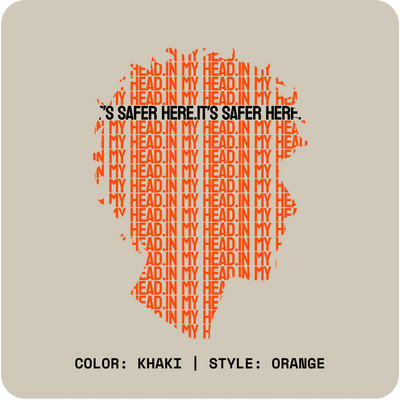
UNINSPIRED makes clothing for the ones who are still running patterns they didn't choose. The UNBROKEN collection holds the truth without asking you to perform through it. Scan the sleeve.