For the ones who spent years being told they just needed to try harder.
For the ones who got the diagnosis at 26 and cried in the parking lot because everything finally made sense.
For the ones still waiting for someone to explain what was actually happening this whole time.
What neurodivergent actually means
Neurodivergent is an umbrella term for brains that diverge from what's considered neurotypical — the statistical norm that most systems, schools, and workplaces were designed around.
It's not a clinical diagnosis. It's a descriptor — a way of naming the experience of processing, perceiving, and moving through the world in ways that don't map neatly onto the standard model.
The umbrella includes: ADHD, autism, dyslexia, dyspraxia, dyscalculia, OCD, Tourette syndrome, and depending on context, sensory processing differences and anxiety. The list isn't fixed. Neither is the experience.
Neurodivergent vs. neurotypical: what the distinction is actually pointing at
Neurotypical means your brain processes and responds in ways that align with what most designed systems expect. It's not a moral category. It's not better or smarter — it's just the assumed default. The template the world was built around.
Neurodivergent means your brain has a different operating system. Not a broken one. Not a worse one. A different one — with its own speeds, thresholds, strengths, and friction points.
The problem isn't the brain. The problem is the persistent mismatch between that brain and institutions that were never designed with it in mind.
The experience of not knowing
A significant number of neurodivergent people — especially women, people of color, and anyone who learned early to mask — don't get diagnosed until adulthood. Some never get diagnosed at all.
What they get instead: the reputation of being "too much" or "not enough." Gifted but disorganized. Smart but unfocused. Full of potential that never arrives quite the way it was supposed to.
Late diagnosis has a particular texture. Relief and grief at the same time — because the explanation arrives with a body count. Every job you lost, every relationship that strained, every time you convinced yourself you were fundamentally defective. You weren't defective. You were undiagnosed and unaccommodated. There's a difference — and it matters.
What executive dysfunction actually looks like
Executive dysfunction is one of the most misunderstood features of ADHD and broader neurodivergence — partly because it doesn't look like what people expect.
Executive functions are the cognitive processes that handle planning, initiation, prioritization, task-switching, and follow-through. When they're dysregulated, the result isn't laziness. It's a specific, maddening inability to bridge the gap between intending to do something and actually doing it.
It looks like: sitting in front of a task for three hours and producing nothing. Starting six things and finishing none. Being completely unable to begin even when the consequences of not beginning are obvious and imminent. Knowing exactly what needs to happen — and staying frozen anyway.
It looks like being called lazy by people who watched you hyperfocus on something you cared about for eight hours straight. The contrast isn't motivation or effort. It's brain chemistry — specifically, how dopamine regulation affects the initiation of non-preferred tasks.
Masking: the performance of neurotypicality
Masking is the practice — usually unconscious, always exhausting — of camouflaging neurodivergent traits to appear neurotypical.
It gets learned young. In classrooms where stimming drew attention. In social situations where the wrong response made people uncomfortable. In jobs where the way you actually worked didn't match how work was supposed to look.
Masking works, in the short term. It keeps you employed. It keeps you included. It keeps people from asking questions you don't have good answers to yet.
What it costs: the sustained energy of performing a version of yourself that doesn't quite exist. The slow disconnection from not knowing, after years of it, which parts of you are real and which parts are the performance. And the burnout — the specific, total burnout — that comes when the mask finally slips. Usually at the worst possible moment.
Emotional dysregulation: the part nobody warned you about
Emotional dysregulation is common in ADHD and other neurodivergent profiles, but it gets significantly underdiscussed relative to the attention and focus conversation.
Emotional dysregulation doesn't mean being irrational. It means emotions arrive with more intensity, shift more quickly, and are harder to modulate in real time. It means rejection hits differently — not more dramatically, but more physiologically. More registered by the nervous system as actual threat.
Rejection Sensitive Dysphoria, common in ADHD, is one of the most acutely painful experiences in the neurodivergent profile — and one of the least visible to people outside it, because most people who experience it develop elaborate strategies to never let rejection happen in the first place. The avoidance looks like procrastination, people pleasing, or just never trying things they might fail at.
ADHD perfectionism: the paradox
This is the part that confuses people who think ADHD means careless: many ADHD brains are deeply perfectionist.
It makes sense when you trace it back. A lifetime of knowing your output doesn't match what you could see clearly in your head. Of trying harder and still falling short. Of getting feedback that felt like confirmation of something you already suspected.
So the response is either: stop trying (why try if you'll fail again), or set an impossible bar for yourself to compensate. Both are survival strategies for the same wound. Neither looks like what people think of when they say "perfectionism."
What the word actually gives you
Neurodivergent isn't a diagnosis. It's a context.
It says: your brain is operating according to its own logic. That logic is real. The things you've struggled with have names. The experiences you couldn't articulate are documented. Other people have had them. The difficulty wasn't character — it was mismatch.
That doesn't fix executive dysfunction. It doesn't undo the years of masking. It doesn't make the world suddenly designed for you.
But the word means you can stop explaining it as a personal failing. And that's not nothing.
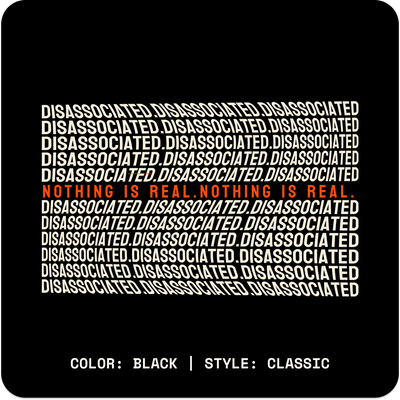
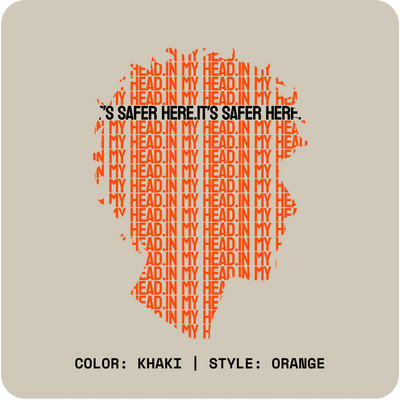
UNINSPIRED makes clothing for the ones whose brains came with different instructions. The Neurodivergent collection says the thing out loud — no explanation required. Scan the sleeve.