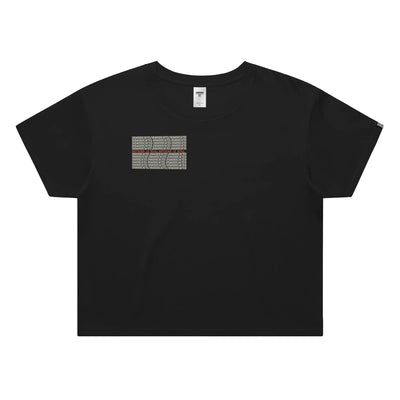
For the ones who are in the room but not in the room.
For the ones who have watched themselves from a slight remove, from somewhere slightly above or behind, and assumed everyone else was doing the same thing.
For the ones who didn't know there was a word for it until they were older, and felt retroactive recognition for every moment it had a name for before they did.
What Dissociation Actually Is
Dissociation is a disconnection. Between you and your thoughts. Between you and your body. Between you and the present moment.
At the mild end — which is where most people live, most of the time they experience it — it's spacing out. It's driving somewhere and not remembering the route. It's being in a conversation and realizing you've been responding on autopilot while your mind was somewhere else entirely. It's the slightly unreal quality of a stressful day where the edges of things feel blurry.
At more intense levels, it's derealization — when the world around you looks slightly wrong, too flat, too vivid, like a set or a simulation. Or depersonalization — when you feel wrong, when you look at your hands and they're technically yours but they don't entirely feel like it.
Most people experience some degree of dissociation at some point. For a significant number of people, it's a regular part of how their nervous system manages overwhelm, stress, or the long-term residue of trauma.
What the Word Does
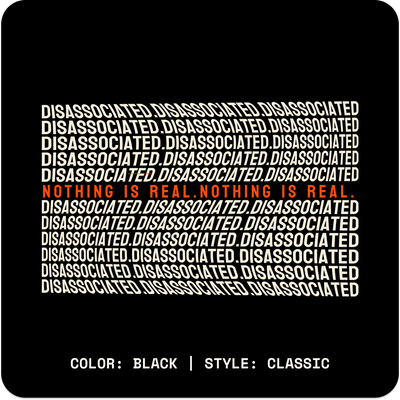
"Disassociated" is the colloquial version that landed in everyday language. It's the word people use when they mean: I'm not fully here right now. I've gone somewhere. The lights are on but I'm not entirely in the building.
For the people who experience it regularly, finding this word is a specific kind of relief. Not because the word fixes anything, but because it converts a private, difficult-to-explain experience into something that can be communicated. Something other people recognize. Something that gets a nod instead of a blank look.
You were always having the experience. The word just makes it speakable.
Who the Disassociated Hoodie Is For
Not for the clinical presentation. For the person who knows what the word means in their body — who has their own version of the experience that the word fits, even if no one has ever formally named it for them.
For the ones who have learned to function through it. Who have sat in meetings while slightly detached from their own face. Who have had conversations they technically completed while some part of them watched from a remove. Who have become very good at performing presence while not entirely being present.
Wearing the word out in the world is something different than explaining it. You don't owe anyone an explanation. The ones who know what it means will recognize it. The ones who don't — the hoodie doesn't need them to.
The QR Code at the Wrist
Every UNINSPIRED piece carries a hidden layer — a woven QR code at the wrist, invisible until you look for it. Scan it and the garment opens: an AR reveal, a message that rotates daily, something that exists only in the moment between you and the piece.
For the Disassociated hoodie, that layer is for the moments when the dissociation is real. When you're not entirely here. When you need something small and specific that's just for you — not for the room, not for the people in it.
It's there when you're ready. Even the ones who aren't fully present yet.
The Disassociated hoodie is part of the UNSPOKEN collection. Made-to-order. For the ones who know what the word means. Scan the sleeve.