For the ones whose brain sends them things they never asked for.
For the ones who spent years thinking the thought meant something about them.
For the ones who are relieved to find out there's a name for it.
What intrusive thoughts actually are
Intrusive thoughts are unwanted, involuntary thoughts, images, or impulses that appear in the mind without intention and often conflict sharply with the person's values, desires, or sense of self.
They are extremely common. Research consistently shows that the majority of people experience intrusive thoughts — the difference between clinical presentations and typical experience is not the presence of the thought, but the relationship to it: how much distress it causes, how much it gets engaged with, how difficult it is to let pass.
The content of intrusive thoughts tends toward the disturbing: violence, harm, taboo subjects, sexual content that feels wrong, fears about one's own intentions or identity. The more disturbing the content, the less likely it is to reflect actual desire. This is important and worth sitting with.
Why intrusive thoughts happen
The brain generates a continuous stream of content. Most of it never reaches conscious awareness — it's filtered before it lands. Intrusive thoughts are the ones that get through the filter: random activations, pattern-matching, threat-detection systems doing their job in ways that occasionally misfire.
The brain is particularly drawn to forbidden territory. This is sometimes called the "white bear" phenomenon, after research showing that trying not to think about something reliably increases how much you think about it. The more a thought is tagged as something you shouldn't have, the more processing power the brain dedicates to monitoring for it — which means generating it more frequently.
This is why intrusive thoughts are not windows into your true desires or hidden character. They're the brain's threat-detection system flagging things that feel dangerous — including thoughts themselves — and then monitoring for them so aggressively that they become a recurring feature.
Intrusive thoughts and OCD
In OCD, intrusive thoughts are the "obsession" half of the obsession-compulsion cycle. A thought arrives — unwanted, distressing. The person engages with it: seeks reassurance, performs a ritual, avoids a situation, mentally reviews it, checks and rechecks. The engagement provides brief relief. The relief reinforces the idea that the engagement was necessary. The thought returns. The cycle repeats.
OCD intrusive thoughts tend to be sticky in a way that casual intrusive thoughts aren't. They resist the brain's normal dismissal system. They demand engagement. And the content often targets the person's highest values — a devoted parent getting intrusive thoughts about harming their child; a deeply moral person getting thoughts about doing something terrible. The thought is so contrary to who the person actually is that it produces extreme distress, which then fuels the cycle.
The content of the thought is not a clue about the person. It is almost reliably the opposite of who they are.
Intrusive thoughts and ADHD
ADHD brains often experience a version of intrusive thoughts that's less about distress and more about the sheer volume and randomness of mental content.
The ADHD mind generates associations, tangents, and connections at a rate that doesn't match the available bandwidth for processing them. Thoughts interrupt other thoughts. Memories surface mid-conversation. Impulses appear and compete for attention.
This can produce its own form of intrusive-thought experience — not the OCD-style disturbing content cycle, but a persistent sense of being in a head full of noise that wasn't invited and won't stop arriving.
The shame spiral that follows
Most people who experience disturbing intrusive thoughts don't tell anyone. Because the thought feels like evidence. Evidence that something is wrong with them — that they're dangerous, broken, not who they think they are.
This silence is almost universal and almost always counterproductive. Because the fear of what the thought means keeps the thought active, generates shame that makes it harder to let go, and prevents access to the information that would actually help: this is common, this is documented, the thought is not a reflection of your character, and the distress you feel about it is actually evidence of your values — not a contradiction of them.
You are not your thoughts
This is not a platitude. It's a precise claim with real weight.
You are not your thoughts in the sense that you did not choose the thought, you do not endorse the thought, and the thought does not have access to the part of you that actually decides what you do and who you are. The part of you that is horrified by the thought — that's you. The thought itself is just content. It arrived. It can also leave.
The relationship that matters isn't whether you have the thought. It's whether you give it authority. Disturbing intrusive thoughts lose most of their power when they stop being treated as meaningful signal and start being treated as noise: acknowledged, unreinforced, allowed to pass.
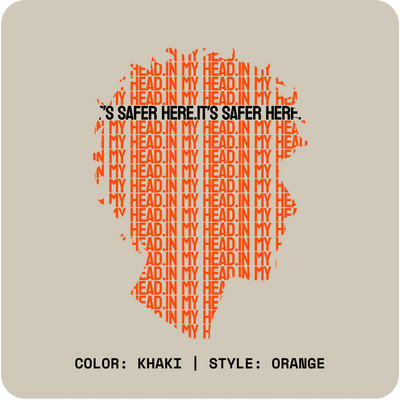
UNINSPIRED makes clothing for the ones who know what it's like to live inside their own head. The In My Head collection names the part that most people keep quiet. Scan the sleeve.