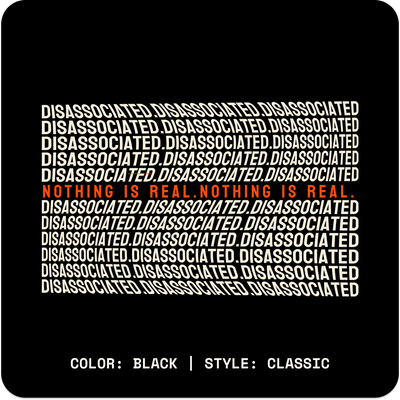
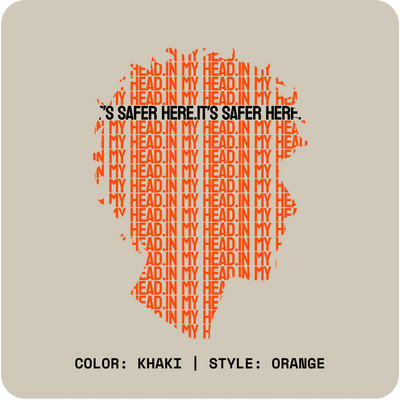
For the ones who got the diagnosis in their twenties or thirties and cried in the parking lot.
For the ones who thought they finally had an answer and found they had a whole new set of questions.
For the ones who are retroactively rereading their entire life.
What the late diagnosis moment is
The late diagnosis of ADHD or autism in adulthood has a specific texture that's hard to describe to people who haven't experienced it.
There's relief. The relief is immediate and real: the thing that has been happening has a name. The experiences that felt unexplainable now have an explanation. The gap between effort and output, the friction with systems that everyone else seemed to navigate more easily, the years of being told to try harder at something that was always going to be harder for you than for them — all of it now has a reason that has nothing to do with character, intelligence, or will.
And alongside the relief: grief. Which surprises a lot of people. You expected relief. You didn't expect to feel the loss of something, especially when what you've gained is finally the truth.
What the grief is about
The grief is about the years before the diagnosis. The years of self-explanation that missed the real explanation. The shame accumulated around symptoms that were being filed under personal failure rather than neurological difference. The opportunities not pursued, the efforts abandoned, the relationships strained by a dynamic that neither party had the language to name.
It's the grief of retroactive recognition: looking back and seeing the whole pattern now that you have the right lens. The school years, the jobs, the relationships, the moments of complete collapse that came from a system running without the support it needed — now visible in a different way. Not as evidence of deficiency. As events that happened to someone operating without accurate information about how their brain worked.
The diagnosis doesn't change what happened. But it changes what it meant. And the process of remeaning everything that came before is not short, and it's not painless.
The anger
There's often anger in the late diagnosis experience, and it doesn't always have a clear target, which makes it harder to process.
Anger at systems that should have identified the pattern earlier. At teachers who described the symptoms as behavioral problems. At a diagnostic framework that was historically built around how ADHD presents in young boys and consistently missed how it presents in girls, in people of color, in people who masked effectively enough that the symptoms didn't look like the template.
Anger at the years of self-blame. At having absorbed the framing of personal failing and worked from inside it for so long. At the energy spent on trying harder at the wrong things, on carrying the weight of an explanation that was never accurate.
That anger is legitimate. It doesn't have to go anywhere specific. But it's worth knowing it's there, and that it's part of the process rather than a sign that something is wrong with the response.
The identity question
Late diagnosis asks a question that doesn't have a clean answer: who were you before the diagnosis, and who are you now?
If this is how your brain works, then everything you've been is filtered through this lens now. The traits you thought were personality — the intensity, the scattered focus, the all-or-nothing engagement, the specific sensitivities — some of those are neurodivergence, not character. Which doesn't make them less yours. But it does mean the explanation for them has changed, and the change has implications for how you understand yourself.
Some people report a period of over-attribution: explaining everything through the new lens, reinterpreting every pattern as diagnosis-related. That's usually a temporary phase of the integration process. Eventually, a more nuanced picture emerges: some of this is neurodivergence, some of it is just you, and the two aren't always easy to separate, and maybe don't need to be.
The community find
One of the most consistent features of late ADHD and autism diagnoses is the discovery, shortly after, of a community of people with the same experience. Online, usually. The forums, the threads, the specific shorthand that develops among people who share a particular way of being in the world.
For people who have spent their lives feeling like they were doing something wrong that everyone else was doing right, finding a community of people who describe the same experiences — in the same vocabulary, with the same particular observations — is its own kind of landmark. Not a cure. Not a solution to anything practical. But the specific relief of being recognized.
What the diagnosis doesn't do
It doesn't undo what came before. It doesn't automatically produce the support that should have been available earlier. It doesn't mean everything is going to be easier now, though some things will be, because you have accurate information to work with.
What it does: it changes the frame. It makes the past explainable in a way that doesn't place the failure where it never belonged. And it gives access — to language, to community, to support structures — that was always relevant but couldn't be reached without the name.
UNINSPIRED makes clothing for the ones who are retroactively reading the story differently. The Neurodivergent collection names the thing that was always there. Scan the sleeve.