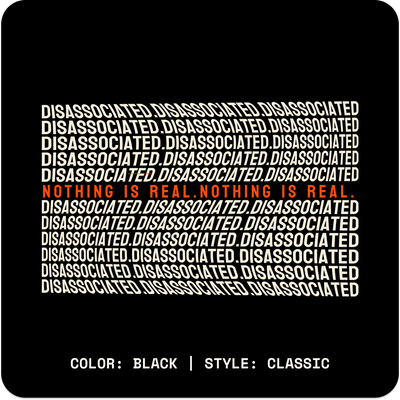
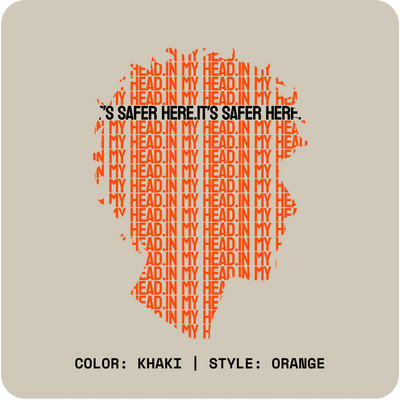
For the ones who said "I'm good" and immediately felt the gap between those words and the truth.
For the ones who have performed fine for so long they can't locate the original signal anymore.
For the ones who would genuinely like to know the difference — not for anyone else, but for themselves.
The Difference Is Harder to Find Than It Sounds
Most people know they're not fine. They just know it the way you know a ceiling needs work — somewhere in the background, constant but unaddressed.
The harder question is whether you can tell the difference between not fine and fine when fine actually happens.
Because after enough time performing fine, the performance becomes the habit. The mask gets worn so consistently it starts to feel like a face. And then one day someone asks how you actually are, and you reach for the answer, and there's just — static.
What 'Actually Fine' Feels Like
Actually fine has a different texture. Not relief exactly. More like the absence of weight.
Things feel close to their actual size — not larger and louder than they should be. When something good happens, you feel it when it's happening. Not three days later. Not distantly, through glass. Right there, in real time.
You can sit without your thoughts chasing you. You can be in a conversation and actually be in it.
It's not happiness. It's not the absence of problems. It's the absence of the gap — between what you're presenting and what's underneath.
What Happens When You Lose Access to the Signal
Years of chronic "I'm fine" can do something to your ability to read your own state.
Not lying exactly. More like the signal going quiet. When you've habitually overridden your own experience in order to function, the override becomes automatic. You stop checking because you stopped expecting the answer to matter.
The tells become subtle. Not "I know I'm not okay" but: everything requires more than it used to. Social interaction costs more than it should. Recovery takes longer. Things that were effort are now effort plus activation energy, plus activation energy for the activation energy.
None of it dramatic enough to name. But it accumulates.
The Part Nobody Asks
"How are you?" isn't the question that helps.
The question that helps is the one you ask yourself, in the quiet before the performance starts: What would I say if I wasn't trying to be fine?
Not for the answer to share with anyone. Just to have access to it. Just to know.
The difference between fine and actually fine isn't about what you tell other people. It's about whether the question has an honest answer somewhere inside you at all.
What Masking Costs Long-Term
Masking is the work of performing a state you're not in.
It's normal. It's socially required in most contexts. You're not going to start answering "how are you?" with an honest status update at the coffee shop counter.
But the cost is real. Maintaining a gap between internal state and external presentation runs on the same reserves as everything else. It depletes quietly, in ways that are easy to attribute to other things — stress, sleep, work, the weather.
The people who run highest on external performance and lowest on internal acknowledgment often don't notice the deficit until they stop. When the crisis passes, or the silence arrives, or the thing they've been managing through finally doesn't need managing. And what they weren't feeling catches up with them in the parking lot.
The Way Back
You don't have to get to actually fine immediately. That's not the point.
The point is having access. Knowing the difference between "I chose not to say" and "I couldn't have said if I'd wanted to." Knowing when the mask is a tool you're using versus a shape you've forgotten you're making.
The way back to actually fine tends to run through actually-not-fine first. Through having the real answer somewhere — even if only for yourself.
Start there.
For the ones who have been fine for so long they forgot what the alternative felt like — that forgetting is the thing. Not the not-fine. The not-knowing.
UNINSPIRED makes clothing for the ones who are tired of performing. The I'm Fine hoodie says the quiet part out loud. Scan the sleeve.