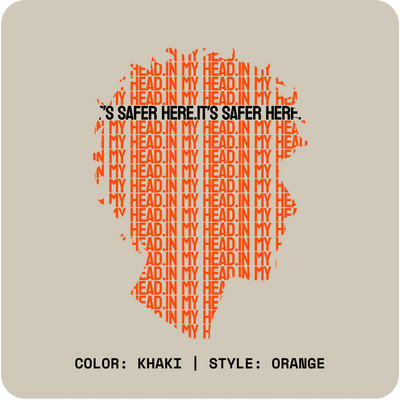
For the ones who learned early that having needs was an inconvenience.
For the ones who've tried to set a boundary and been told they were being difficult.
For the ones who still feel guilty every time they say no, even when they know they're right to.
What Boundaries Actually Are
A boundary is a limit that defines what you will and won't accept in your relationships and environments. Not a wall. Not a punishment. Not something you do to people. Something you communicate about yourself — about what works for you, what doesn't, and what you need in order to show up the way you want to in your relationships.
The word has been used in enough self-help content that it's started to feel like jargon — a concept that sounds good in theory and is hard to locate in practice. But the underlying reality is straightforward: you have limits. Everyone does. Boundaries are the communication of those limits to the people in your life.
The absence of communicated limits doesn't mean the limits don't exist. It means you're managing them internally, at cost to yourself, without the people in your life having accurate information about what you actually need.
The Guilt Problem
For a lot of people, especially people who grew up in environments where their needs were treated as inconvenient or were punished, setting a limit produces guilt. The guilt is the nervous system's prediction of the consequence: if I say no, something bad will happen. The relationship will fracture. The person will be angry. I will be seen as selfish, cold, unreasonable.
The guilt is information about the past, not an accurate prediction of the present. Most relationships can hold a limit. The ones that can't — the ones that react to any boundary with punishment, withdrawal, or escalation — are giving you information about the relationship that you need to have.
The guilt doesn't mean you did something wrong. It means your nervous system learned that taking up space was dangerous. That's worth knowing about. It's not worth obeying forever.
Why 'Selfish' Is the Wrong Frame
The charge of selfishness assumes that everyone else's needs have priority over yours. That the appropriate posture in relationships is perpetual availability, regardless of cost to yourself. That saying no to one thing means caring less about the person.
This frame is unsustainable, and it produces exactly the kind of resentment it's supposed to prevent. The person who gives without limits gives until they can't. The moment the giving stops — not by choice but by depletion — the relationship suffers more than it would have if limits had been communicated honestly from the start.
Sustainable generosity requires limits. Not because limits are generous, but because they're what make continued generosity possible. You cannot keep giving from an empty position. Saying no to the thing you can't do is what makes yes to the things you can meaningful.
The Difference Between a Boundary and an Ultimatum
A boundary is a statement about yourself: "I'm not available after 9pm" or "I need to leave this conversation if it gets heated." It describes what you'll do, not what the other person must do.
An ultimatum is a demand about someone else's behavior, with a consequence attached: "If you do this, I'll do that." Ultimatums are sometimes appropriate, but they're not the same thing as a boundary.
The distinction matters because a lot of resistance to boundaries comes from confusing them with ultimatums. A boundary doesn't require the other person to change. It only requires them to know what you're doing. What they do with that information is up to them.
What the Resistance Usually Is
When someone reacts badly to a stated limit — with anger, guilt-tripping, withdrawal, or claims that you're being difficult — they're usually communicating one of a few things:
That they're not used to the limit, and the unfamiliarity feels like a threat to the relationship. This usually resolves with time and consistency.
That the limit is genuinely inconvenient for them, and they'd prefer you not have it. This is honest, and it's information about their priorities relative to yours.
That the relationship was structured around your not having limits, and a limit disrupts the structure. This is the most important piece of information a limit can produce.
For the ones who've been calling their limits selfish for years — the limit is not the problem. Knowing what you can and can't do, and communicating it honestly, is the opposite of selfish. It's what makes it possible for you to be actually present in your relationships rather than performing presence while managing depletion alone.
UNINSPIRED makes clothing for the ones who are done performing for rooms that never asked how they were actually doing. Shop the Annoying Pleasantries collection. Scan the sleeve.