For the ones who've achieved a lot and still felt like it wasn't enough.
For the ones who've looked for proof of their value in external things and found the proof keeps expiring.
For the ones who want an honest account of what worth actually is and where it comes from.
The Definitions
Self-esteem is the evaluation of yourself based on your qualities, abilities, and performance. It's contingent — it goes up when things go well and down when they don't. It's responsive to external feedback: what other people think of you, how your work is received, whether you succeeded at the thing you tried. It's comparative: how you measure up relative to others, relative to your own standards, relative to who you thought you'd be by now.
Self-worth is the sense of your inherent value as a person — value that isn't contingent on what you do, achieve, produce, or become. It doesn't require an evaluation. It isn't earned. It isn't revoked by failure. It exists prior to accomplishment and persists through it.
The distinction sounds abstract until you notice how you treat yourself when things go wrong. If your esteem is what took the hit, the failure feels bad but recoverable. If your worth is what took the hit — if the failure means something about what you fundamentally deserve — the impact is different in kind.
The Problem With Building on Esteem
High self-esteem built on performance is structurally unstable. It depends on continued performance. When performance dips — through failure, age, circumstance, or the inevitable variability of human output — the esteem built on it dips too.
This produces the pattern most high achievers recognize: the need for the next success, the next validation, the next external evidence that you're enough. Not because you're vain or insecure in a simple sense, but because your sense of your own value is tied to a renewable resource that requires constant renewal. The fuel runs out. The tank needs refilling. The work never actually proves the thing for long enough.
The esteem might be high. The worth underneath might be untouched.
What Unconditional Worth Means
The idea that your worth is inherent — that you have value that isn't contingent on what you produce or become — often feels either obvious or unbelievable, depending on how you were raised.
For people who grew up in environments where love and approval were conditional — given in response to performance, achievement, or compliance, and withdrawn when these weren't present — the idea of worth that doesn't need to be earned is genuinely foreign. The only model they have is the transactional one.
For people raised with consistent unconditional positive regard — the sense that they were loved and valued not for what they did but for who they were — the inherent worth model is more accessible. The foundation was built in childhood. The structure doesn't require constant maintenance.
What It Feels Like When Worth Is Intact
When someone has a functional sense of inherent worth, failure hurts but doesn't dismantle. Criticism lands but doesn't redefine. The work can be bad without the person being bad. The mistake can be significant without the person being fundamentally inadequate.
There's a ground. Something to come back to when the external evidence goes sideways. Not optimism, not positive thinking, not the refusal to acknowledge difficulty — a stable sense of self that doesn't require external validation to persist.
This is different from arrogance. Arrogance is usually compensation for worth that doesn't feel stable — the performance of certainty where certainty doesn't exist. Worth that's actually intact doesn't need to announce itself.
Building It Later
If the foundation wasn't built in childhood, it can be built later. Not easily or quickly — and not through affirmations, which are too easily dismissed by the existing baseline — but through consistent experience of being treated as inherently worthy. Therapy that provides that experience. Relationships that don't make your value contingent on performance. Gradually, through accumulated evidence that's harder to discount because it's relational rather than cognitive.
The work is real. It's slower than most people want it to be. And the destination is worth it in a way that the next achievement, the next validation, the next external proof never quite is.
For the ones who've been trying to earn their way to feeling like enough — the enough was already there. It was just under the evidence. Excavation is slower than achievement, but it goes somewhere achievement doesn't reach.
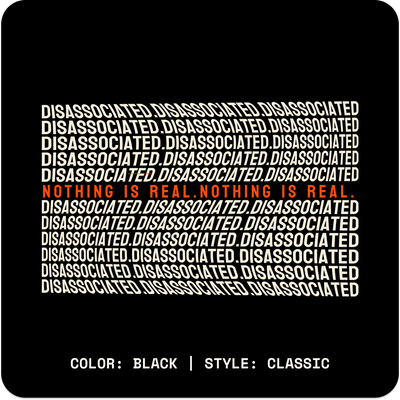
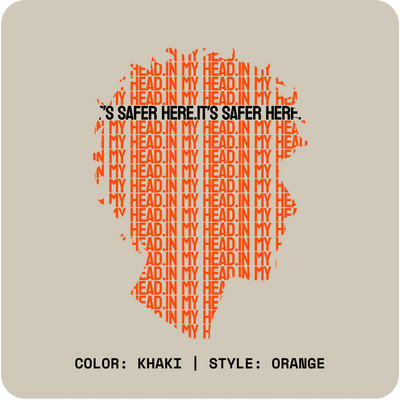
UNINSPIRED makes clothing for the ones who know they're more than the proof they've accumulated. The Not a Statistic hoodie says what the scoreboard forgets to say. Scan the sleeve.