For the ones who feel criticism in their chest before they've had time to think about it.
For the ones who have built their whole life around making sure no one ever has reason to reject them.
For the ones who know the response is too much and can't make it be less.
What Rejection Sensitive Dysphoria actually is
Rejection Sensitive Dysphoria — RSD — is an acute, intense emotional response to perceived or actual rejection, criticism, teasing, or the sense that you have failed to meet a standard. It's common in ADHD and appears across other neurodivergent profiles, though it's underdiagnosed partly because it wasn't historically included in diagnostic criteria.
"Dysphoria" means intense emotional suffering. The name is precise: RSD is not mild disappointment or ordinary hurt. It's a sudden, overwhelming experience of emotional pain that people consistently describe as one of the most difficult parts of their ADHD — more disruptive, in many cases, than the attention difficulties the diagnosis is most associated with.
Why it happens in ADHD
The ADHD nervous system has a different relationship with emotional regulation. The prefrontal cortex — which is responsible for modulating emotional responses, providing context, and dampening reactive impulses — has a weaker regulatory connection in ADHD than in neurotypical brains. The amygdala, which processes threat, fires more easily and more intensely.
In the context of rejection or criticism, this means: the threat signal arrives at full volume, the dampening system doesn't catch it in time, and the experience of rejection lands physiologically before the thinking brain has had a chance to provide context. The rational assessment of whether the rejection is actually significant — or even actually rejection — arrives after the pain, not before it.
There's also a history component. ADHD brains often carry accumulated experiences of failure, correction, and social friction — the years of being told to try harder, pay attention, stop forgetting, stop overreacting. That accumulation lowers the threshold at which the nervous system treats evaluation from others as threat. The sensitivity isn't arbitrary. It was trained.
What it feels like
Physical. That's the word most people reach for.
A criticism — minor, delivered without particular force — produces a sensation in the chest. A constriction. A heat. Something that doesn't feel like sadness or disappointment but closer to what physical injury feels like, except it came from words.
It arrives suddenly. Without a gradual escalation. The comment lands, and then the full weight of the response is already there — difficult to manage, difficult to hide, difficult to talk down even with full awareness of what's happening.
And then, for many people, the shame of the response: the awareness that this is too much, that the reaction doesn't fit the situation, that the person who delivered the criticism almost certainly didn't intend this. That awareness doesn't reduce the pain. It adds to it.
How RSD shapes a life
When rejection reliably produces this level of pain, the rational response is to minimize exposure to rejection. The nervous system is doing what nervous systems do: trying to reduce the occurrence of experiences that register as threat.
The result: not applying for things where rejection is possible. Not sharing creative work. Not trying the thing where there's any chance of not succeeding. Not saying the thing where there's any chance of it not landing. Not disagreeing, not correcting, not establishing limits — because all of those create the possibility of an unfavorable response, and the cost of an unfavorable response is high.
This looks, from the outside, like: low confidence, avoidance, people pleasing, lack of ambition, or the inexplicable pattern of never following through on things they clearly want and are capable of. It doesn't look like what it is: a specific neurological sensitivity that's been quietly running risk calculations on every potential exposure to rejection, and coming up conservative.
The relationships impact
RSD in relationships is its own topic. The intense need for reassurance that doesn't feel reassuring for long enough. The interpretation of neutrality as coldness, of silence as disapproval. The preemptive apology before anything has gone wrong. The complete withdrawal after something that might have been criticism — or might not have been, but registered that way.
For people who don't have RSD, this can be exhausting to be close to. For people who have it, it's exhausting to live with. The solution is not "stop being so sensitive" — the sensitivity is neurological, not a decision. The solution is naming it accurately, building tolerance for the experience when it arrives, and finding relationships where the pattern is understood rather than pathologized.
It's not the same as low self-esteem
This is worth separating. People with RSD often have a reasonably accurate assessment of their own capabilities. The issue isn't that they think poorly of themselves in a general way. The issue is that the nervous system treats evaluation by others as a specific, acute threat — and the response to that threat is physiological before it's rational.
Self-esteem work doesn't fix a nervous system response. Understanding the mechanism — knowing that the pain is real, that the response is neurological, that it doesn't mean the thing it seems to mean — provides context. Context doesn't eliminate the experience. But it changes the relationship to it.
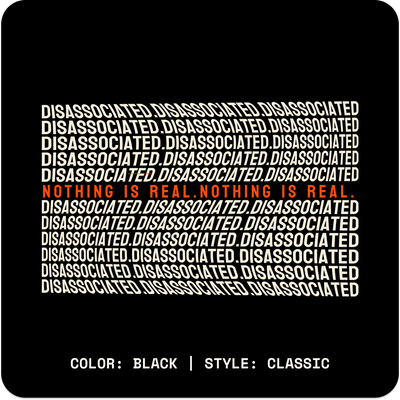
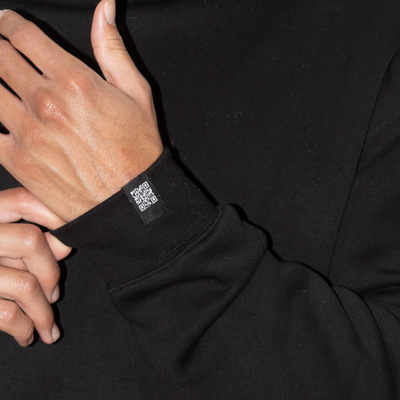
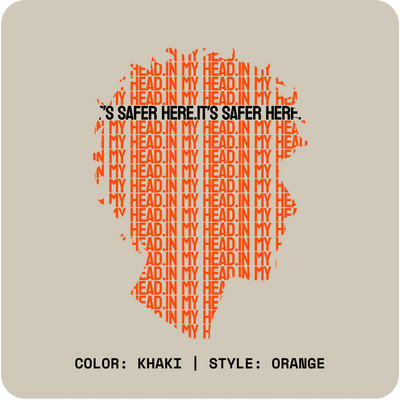
UNINSPIRED makes clothing for the ones who feel everything before they've had a chance to think about it. The ADHD collection doesn't ask you to feel it differently. Scan the sleeve.