Overthinking: When Your Brain Won't Let You Land Anywhere

For the ones still analyzing something that happened three weeks ago.

For the ones who run every possible outcome of a conversation before it happens — and several that will never happen.

For the ones who can't just let it go, no matter how many times they've been told to.

What Overthinking Actually Is

Overthinking is repetitive, excessive thought about a problem, situation, or experience — thinking that continues past the point where it's generating useful information and into territory where it's just generating more thinking. The loop. The thought that leads to a related thought that leads back to the original thought with slightly different framing, over and over.

Two primary forms: rumination and worry. Rumination is backward-focused — replaying events, conversations, decisions, looking for what went wrong, what you should have said, what it means about you. Worry is forward-focused — anticipating outcomes, mapping worst cases, rehearsing potential disasters. Both are attempts to process something or solve something. Both tend to generate more anxiety than resolution.

Overthinking isn't a lack of discipline or an inability to let things go. It's the nervous system trying to think its way to safety. When something feels threatening — uncertain, unresolved, or out of your control — the brain generates more thinking about it. More analysis. More scenario-mapping. More replay. The theory is: if you think about it enough, you'll find the solution, or you'll prepare yourself for all possible outcomes, or you'll understand it well enough that it stops being a threat.

The problem: most of the things people overthink don't have thought solutions. They have time solutions, or action solutions, or no solutions. And in the absence of a thought solution, the thinking continues indefinitely.

What It Feels Like From Inside

Exhausting. The thought you came in with at 11pm is still running at 2am in slightly different versions. The conversation you're analyzing has been replayed enough times that you've lost track of what actually happened versus what you've added. The worst-case scenario you've been rehearsing has become so detailed that it feels almost like a memory.

There's also a quality of compulsion to it. You don't choose to keep thinking about the thing. You try to think about something else and the thing comes back. You try to go to sleep and the loop starts. The thought arrives uninvited, repeatedly, with a quality that feels like it needs to be resolved before it will stop.

And there's often a secondary layer: the thoughts about the thoughts. The awareness that you've been going over this for two hours and it's not helping and you should stop. The frustration with yourself for not being able to stop. The thought that there's something wrong with you for not being able to stop. Which is its own kind of thought loop.

Why It's Hard to Stop

Because stopping feels like losing control over something the brain is trying to control through thought. The overthinking isn't irrational — from the nervous system's perspective, it's a reasonable strategy. You have an unresolved thing. Thinking more about it might resolve it. The strategy is wrong for this particular problem, but the logic is coherent.

"Just stop thinking about it" fails because it doesn't address the underlying state that's driving the thinking. The anxiety or uncertainty or grief or conflict that the brain is trying to resolve through analysis. Turning off the thoughts without addressing the state is like turning off the alarm without addressing the fire.

What also makes it hard: overthinking often temporarily reduces anxiety — the engagement with the problem feels like doing something. It's not, but it feels productive. So there's a short-term reinforcement of the pattern, even when the long-term effect is more depletion and no resolution.

Overthinking and Anxiety

They're deeply connected. Anxiety produces overthinking — the anxious state generates the scanning and worst-casing and replay. And overthinking produces anxiety — the more you engage with catastrophic scenarios, the more activated your nervous system becomes. One feeds the other. The loop can run for a very long time without external interruption.

For people with anxiety, overthinking often has a characteristic pattern: the original concern is legitimate, the analysis starts reasonably, and then it gradually escalates to scenarios that are highly unlikely but vividly imagined. The brain tracks urgency, not probability. A 5% chance that something terrible will happen gets the same processing weight as a 95% chance it won't. The outlier gets most of the attention.

What Actually Interrupts It

Not willpower. Not deciding to stop. The nervous system doesn't respond to command in that way.

Physical state change. Moving the body. Changing the environment. Creating sensory input that is immediate and demanding enough to interrupt the loop. Cold water. Exercise. Something that takes the nervous system out of the mode that sustains the thinking.

Writing it down — specifically to get it out of the loop and into a fixed form. The brain sometimes loops because it's afraid of losing the thought. Getting it down somewhere removes the need to keep holding it.

Completing the thing that's being overthought, when possible. Or making a concrete decision about the thing, even if it's the decision to not decide right now. Closure, even partial, can interrupt the loop that uncertainty feeds.

And for chronic overthinking — the kind that's been running for years, that loops across multiple domains, that significantly affects sleep and daily functioning — support is worth seeking. Overthinking at that level is usually a symptom of something that benefits from real attention, not just coping strategies applied to the surface.

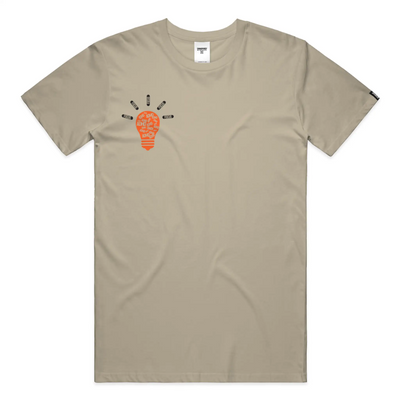
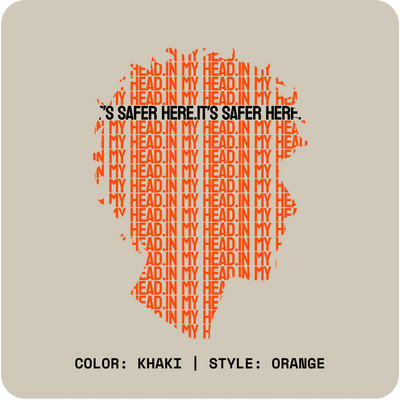
UNINSPIRED makes clothing for the ones whose brain treats every situation like a problem to be thought into safety. The Am I Okay collection is for the ones still running the loop. Scan the sleeve.

Overthinking: When Your Brain Won't Let You Land Anywhere

For the ones still analyzing something that happened three weeks ago.

For the ones who run every possible outcome of a conversation before it happens — and several that will never happen.

For the ones who can't just let it go, no matter how many times they've been told to.

What Overthinking Actually Is

Overthinking is repetitive, excessive thought about a problem, situation, or experience — thinking that continues past the point where it's generating useful information and into territory where it's just generating more thinking. The loop. The thought that leads to a related thought that leads back to the original thought with slightly different framing, over and over.

Two primary forms: rumination and worry. Rumination is backward-focused — replaying events, conversations, decisions, looking for what went wrong, what you should have said, what it means about you. Worry is forward-focused — anticipating outcomes, mapping worst cases, rehearsing potential disasters. Both are attempts to process something or solve something. Both tend to generate more anxiety than resolution.

Overthinking isn't a lack of discipline or an inability to let things go. It's the nervous system trying to think its way to safety. When something feels threatening — uncertain, unresolved, or out of your control — the brain generates more thinking about it. More analysis. More scenario-mapping. More replay. The theory is: if you think about it enough, you'll find the solution, or you'll prepare yourself for all possible outcomes, or you'll understand it well enough that it stops being a threat.

The problem: most of the things people overthink don't have thought solutions. They have time solutions, or action solutions, or no solutions. And in the absence of a thought solution, the thinking continues indefinitely.

What It Feels Like From Inside

Exhausting. The thought you came in with at 11pm is still running at 2am in slightly different versions. The conversation you're analyzing has been replayed enough times that you've lost track of what actually happened versus what you've added. The worst-case scenario you've been rehearsing has become so detailed that it feels almost like a memory.

There's also a quality of compulsion to it. You don't choose to keep thinking about the thing. You try to think about something else and the thing comes back. You try to go to sleep and the loop starts. The thought arrives uninvited, repeatedly, with a quality that feels like it needs to be resolved before it will stop.

And there's often a secondary layer: the thoughts about the thoughts. The awareness that you've been going over this for two hours and it's not helping and you should stop. The frustration with yourself for not being able to stop. The thought that there's something wrong with you for not being able to stop. Which is its own kind of thought loop.

Why It's Hard to Stop

Because stopping feels like losing control over something the brain is trying to control through thought. The overthinking isn't irrational — from the nervous system's perspective, it's a reasonable strategy. You have an unresolved thing. Thinking more about it might resolve it. The strategy is wrong for this particular problem, but the logic is coherent.

"Just stop thinking about it" fails because it doesn't address the underlying state that's driving the thinking. The anxiety or uncertainty or grief or conflict that the brain is trying to resolve through analysis. Turning off the thoughts without addressing the state is like turning off the alarm without addressing the fire.

What also makes it hard: overthinking often temporarily reduces anxiety — the engagement with the problem feels like doing something. It's not, but it feels productive. So there's a short-term reinforcement of the pattern, even when the long-term effect is more depletion and no resolution.

Overthinking and Anxiety

They're deeply connected. Anxiety produces overthinking — the anxious state generates the scanning and worst-casing and replay. And overthinking produces anxiety — the more you engage with catastrophic scenarios, the more activated your nervous system becomes. One feeds the other. The loop can run for a very long time without external interruption.

For people with anxiety, overthinking often has a characteristic pattern: the original concern is legitimate, the analysis starts reasonably, and then it gradually escalates to scenarios that are highly unlikely but vividly imagined. The brain tracks urgency, not probability. A 5% chance that something terrible will happen gets the same processing weight as a 95% chance it won't. The outlier gets most of the attention.

What Actually Interrupts It

Not willpower. Not deciding to stop. The nervous system doesn't respond to command in that way.

Physical state change. Moving the body. Changing the environment. Creating sensory input that is immediate and demanding enough to interrupt the loop. Cold water. Exercise. Something that takes the nervous system out of the mode that sustains the thinking.

Writing it down — specifically to get it out of the loop and into a fixed form. The brain sometimes loops because it's afraid of losing the thought. Getting it down somewhere removes the need to keep holding it.

Completing the thing that's being overthought, when possible. Or making a concrete decision about the thing, even if it's the decision to not decide right now. Closure, even partial, can interrupt the loop that uncertainty feeds.

And for chronic overthinking — the kind that's been running for years, that loops across multiple domains, that significantly affects sleep and daily functioning — support is worth seeking. Overthinking at that level is usually a symptom of something that benefits from real attention, not just coping strategies applied to the surface.

UNINSPIRED makes clothing for the ones whose brain treats every situation like a problem to be thought into safety. The Am I Okay collection is for the ones still running the loop. Scan the sleeve.


0 comments

Leave a comment

Please note, comments must be approved before they are published

Favorites

Our most popular looks of the season

Relevant Product