For the ones who had to leave a party early and couldn't explain why.
For the ones who needed to sit in a quiet car for twenty minutes before they could walk into the house.
For the ones who googled overstimulated meaning at 11pm because something kept happening in their body and nobody had given it a name.
This one's for you.
What Does Overstimulated Mean?
Overstimulated means your nervous system has taken in more than it can process at once.
Not a mood. Not being dramatic. Not something you can just push through if you try hard enough.
Your senses — sound, light, touch, social input, noise, movement — they all feed information to your brain constantly. Most of the time, your nervous system filters that input in the background and you don't notice it happening. But when the volume gets too high, or there's too much coming in at once, the filter breaks down.
And then everything is too much.
The sound of overlapping conversations. The flicker of overhead lighting. Someone standing too close. The texture of a tag on the back of your shirt. The hum of an air conditioner. None of these things are a big deal on their own. All of them at once — when your system is already at capacity — and suddenly you can't think, can't form a sentence, can't remember what you were about to say.
That's what overstimulated means.
What Overstimulation Feels Like In Your Body
People describe it differently. Some say it feels like every nerve ending is turned up to a frequency they can't tune out. Some say their skin starts to feel wrong — like they want to crawl out of it. Some just go quiet, retreat, go flat.
Common physical signs:
- Sudden exhaustion that comes out of nowhere
- Irritability that feels bigger than the situation warrants
- Difficulty forming thoughts or completing sentences
- Noise or light that starts to feel physically painful
- The urge to go somewhere dark and quiet, immediately
- Feeling like you're watching yourself from outside your body
- Skin sensitivity — fabric, touch, temperature suddenly unbearable
- Heart rate going up for no obvious reason
- Crying without being sad
Not everyone gets all of these. Some people get two. Some people get all of them at once. The specific combination is less important than recognizing what's underneath it: your nervous system telling you it's hit its ceiling.
Why It Happens More Than It Used To
You're not imagining it getting worse.
The world is genuinely louder than it was. Open-plan offices. Constant notification sounds. Social media feeds that never end. Group chats. Shared playlists. The ambient hum of every space optimized for stimulation rather than rest.
Your nervous system wasn't designed for this volume. Nobody's was.
But some people feel it earlier and harder — and there are reasons for that.
ADHD and Overstimulation
If you have ADHD, overstimulation isn't just common — it's built into how your nervous system is wired.
ADHD affects the brain's ability to regulate attention and filter sensory input. That filtering process that most people do automatically? For people with ADHD, it's manual. Effortful. Exhausting. You're doing the same filtering work as everyone else, but consciously, and with less dopamine to help.
This means crowded restaurants aren't just loud — they're actively hard to be in. Trying to focus on one conversation while three other ones are happening nearby isn't just difficult — it can feel impossible. Sensory input that other people tune out without thinking about it lands differently when your brain isn't doing that tuning automatically.
ADHD overstimulation is also frequently misread — by other people and by the person experiencing it — as anxiety, rudeness, immaturity, or being "too sensitive." It's none of those things. It's a neurological difference that shows up in the body.
Sensory Overstimulation and Neurodivergence
ADHD isn't the only path to overstimulation. Autism, sensory processing differences, anxiety disorders, chronic stress, trauma — all of these affect how the nervous system handles incoming information.
Sensory overstimulation refers specifically to when sensory input — light, sound, touch, smell, movement — triggers a stress response. For some people this is mild. For others it's disabling. For most people it exists somewhere on a spectrum that changes depending on how rested they are, how much they've already absorbed that day, and whether they've had any space to decompress.
The capacity isn't fixed. Which means yesterday you could handle the concert and today you can't handle the grocery store. That's not a contradiction. That's how a nervous system under load actually works.
The Part Nobody Talks About
You've probably been told — or told yourself — that you should be able to handle more.
That leaving early is rude. That needing quiet is antisocial. That the headache and the irritability are just you being difficult.
You've probably learned to apologize for needing to decompress. To frame it as a personality flaw instead of a biological limit. To push through anyway and then wonder why you're completely empty afterward.
Overstimulated doesn't mean weak. It doesn't mean fragile. It means your nervous system is working exactly the way a nervous system works — with a ceiling. With a capacity. With a point past which it cannot continue processing without cost.
Every nervous system has that point. Yours just might be more honest about it.
What Actually Helps
Not a list of solutions. Not a five-step protocol. Just what tends to be true:
Quiet helps. Dark helps. Alone helps — or at minimum, fewer people.
Removing one sense input at a time tends to work better than trying to remove them all at once. Headphones before sunglasses before finding a corner to stand in.
Time helps. You can't think your way out of a nervous system that's hit capacity. You have to wait for the load to process.
Knowing what it is — having the word for it — helps more than most people expect. When you know your nervous system is overwhelmed rather than thinking you're falling apart, the panic on top of the overstimulation doesn't stack the same way.
And for what it's worth — the people who get it get it immediately. The ones who need it explained usually don't.
For the ones who have been calling it anxiety for years because nobody offered them a better word — overstimulated is the better word.
You already knew something was happening. Now you have the name for it.
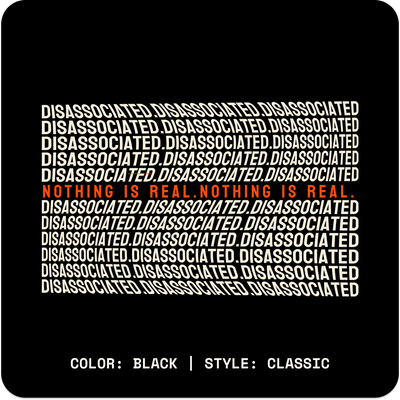
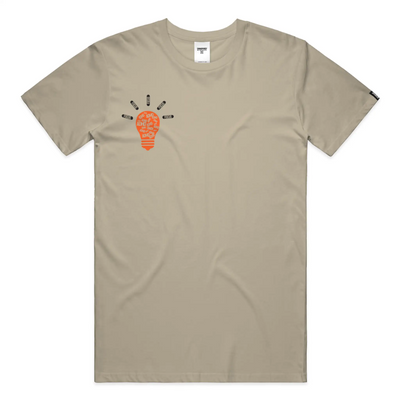
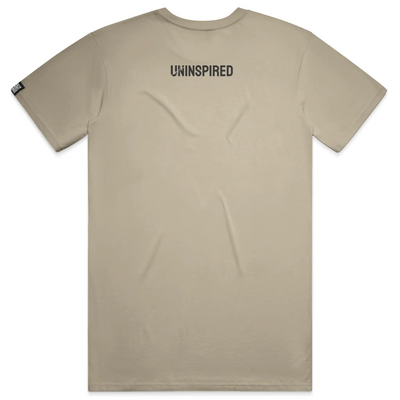
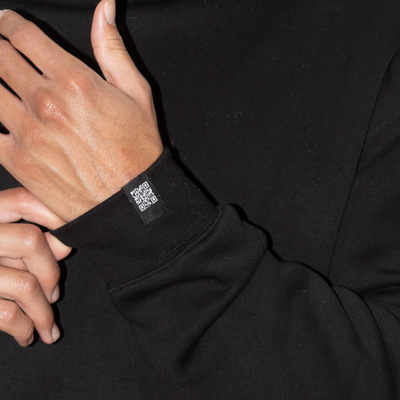
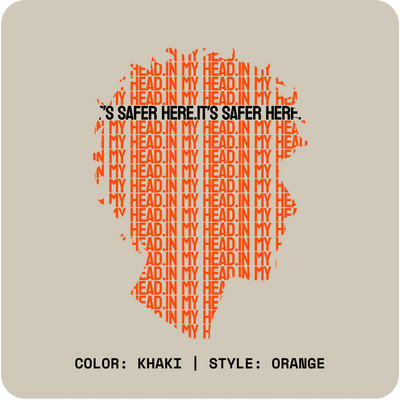
UNINSPIRED makes clothing for the ones who are done performing fine. The Overstimulated hoodie says the thing you've been trying to explain since you were a kid. Scan the sleeve. There's more hidden inside.