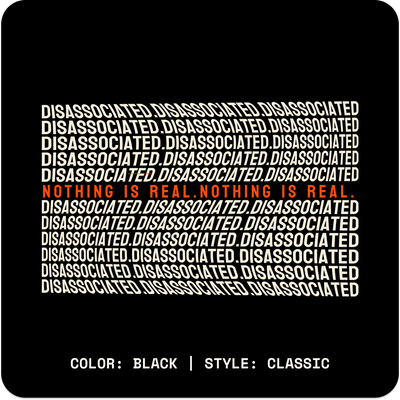
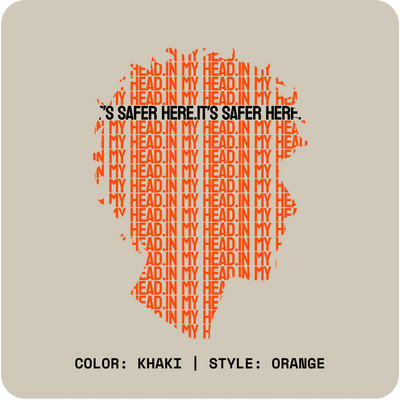
For the ones who knew something was different about how their brain worked before they had a name for it.
For the ones who've heard "I'm so OCD about this" from someone arranging their desk and felt the distance between that sentence and their actual experience.
For the ones who are exhausted in a way that's hard to explain to people who don't know what the loop actually costs.
What OCD Is Not
OCD is not a preference for cleanliness. It's not being particular about how things are organized. It's not double-checking that you locked the door once because you're responsible. It's not the mildly perfectionist habits that get called OCD casually in conversation.
The casual use of "OCD" as a descriptor for tidiness or thoroughness has created a significant gap between what the word means in common usage and what it describes clinically. That gap has a cost for the people living with the actual condition — it makes it harder to explain, harder to be believed, and harder to get accurate information about what's happening.
What OCD Actually Is
Obsessive-compulsive disorder is characterized by two interconnected features: obsessions and compulsions.
Obsessions are unwanted, intrusive thoughts, images, or urges that arrive without invitation and cause significant distress. They are ego-dystonic — they conflict with your sense of who you are and what you value. The content is often disturbing specifically because it contradicts your deepest values: thoughts about harm, contamination, sexuality, religion, relationships, order, or certainty.
The thoughts don't reflect your desires or intentions. The person with OCD who has intrusive thoughts about harm is not dangerous — the distress caused by the thought is evidence of the inverse of the thought's content. The thought is horrifying to them precisely because it contradicts what they care about.
Compulsions are behaviors or mental acts performed in response to obsessions, intended to reduce the distress the obsession causes or prevent a feared outcome. They provide temporary relief. The relief reinforces the compulsion, which increases the obsession, which requires more compulsion. The cycle.
Compulsions can be visible — checking, arranging, washing, repeating actions — or invisible: mental reviewing, seeking reassurance internally, counting, praying, neutralizing one thought with another.
The Loop
The most important thing to understand about OCD is how the loop works. The obsession arrives. It causes distress. The compulsion reduces the distress temporarily. The reduction reinforces the idea that the compulsion was necessary. The nervous system files this away. The obsession returns, often stronger, because the compulsion has confirmed that it's a threat worth monitoring.
The loop isn't a thinking problem. It's a threat-detection problem. The brain has miscategorized the intrusive thought as a genuine danger and is doing exactly what it's supposed to do with genuine dangers — it's trying to resolve the threat. The compulsion is the attempted resolution. But intrusive thoughts can't be resolved by compulsion. They can only be addressed by changing the relationship to the thought itself.
Pure O
"Pure O" refers to presentations of OCD where the compulsions are primarily mental rather than behavioral. The name is slightly misleading — there are always compulsions, they're just internal: rumination, reviewing, mental reassurance-seeking, analyzing the thought for meaning.
Pure O presentations are often unrecognized for longer because the visible checking and repetition associated with OCD aren't present. People with Pure O frequently spend years in the loop before recognizing what's happening or being able to name it accurately.
What Actually Helps
The gold standard treatment for OCD is Exposure and Response Prevention (ERP) — a form of cognitive behavioral therapy that involves deliberately exposing yourself to the feared thought or situation without performing the compulsion, allowing the anxiety to peak and subside without the compulsion relieving it.
This sounds counterintuitive. It works because it interrupts the loop at the point where the loop reinforces itself. When the compulsion isn't performed and the feared outcome doesn't occur, the brain gradually recalibrates its threat assessment.
ERP is difficult. It's the opposite of what the loop is telling you to do. It works best with a therapist trained specifically in OCD treatment, not just general anxiety or CBT.
For the ones who've been living with the loop and calling it anxiety, perfectionism, or just the way their brain works — the loop has a name. And the name means there are people who know exactly what it costs and exactly what helps.
UNINSPIRED makes clothing for the ones carrying things they can't say out loud. Shop the UNSPOKEN collection. Scan the sleeve.