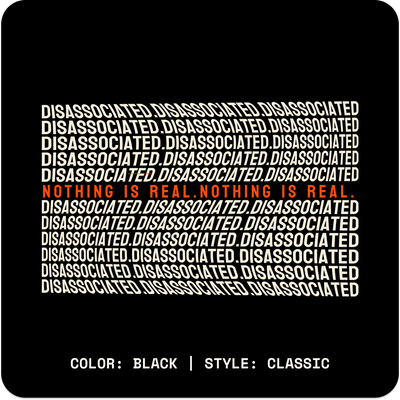
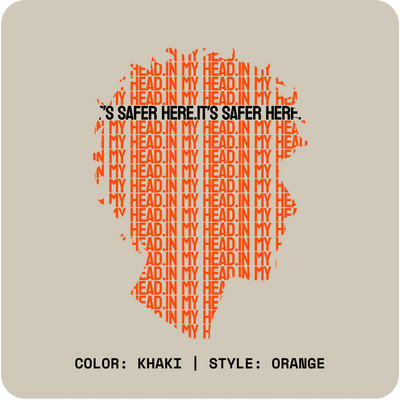
For the ones who've done the math on who they can tell and come up with a very short list.
For the ones who've described their experience to someone and watched the interaction shift slightly in a way that didn't go back.
For the ones who've performed fine specifically because they know what it costs to not.
What Stigma Is
Stigma is a mark of disgrace — a set of negative associations attached to a characteristic that causes the person who has it to be socially devalued. Mental health stigma is the collection of negative attitudes, beliefs, and behaviors directed at people with mental health conditions, or at mental health difficulties more broadly.
It operates at multiple levels. Public stigma is what the broader culture believes and enacts. Structural stigma is how institutions encode those beliefs — in insurance systems, workplace policies, legal contexts, media representations. Self-stigma is what happens when the person internalizes the broader culture's attitudes and turns them against themselves: the sense of shame, weakness, or unworthiness that prevents disclosure or help-seeking.
All three reinforce each other. Public stigma creates the conditions for self-stigma. Self-stigma produces concealment. Concealment means the only visible representations of mental health are the most extreme ones, which reinforces public stigma. The loop is self-sustaining.
Why It Persists Despite the Conversation
The cultural conversation about mental health has expanded significantly. "It's okay not to be okay" is now a common enough phrase that it appears on gift shop merchandise. Mental health awareness is at an all-time high. The vocabulary for psychological experience has entered mainstream usage.
And yet.
People still don't tell their employers about their mental health conditions at the rates you'd expect if the conversation had actually reduced stigma. People still calibrate carefully who they tell what. People still experience the relationship shift when they say something real. People still make the cost calculation and decide that performing fine is cheaper than the alternative.
Awareness is not the same as acceptance. The cultural conversation has expanded what can be said, but it hasn't equally expanded what can be said without cost. Talking about mental health in general is more acceptable. Talking about your specific mental health, in real-time, in contexts that matter, still carries risk.
The Specific Costs
The risks that stigma creates are real and context-specific:
Professional. Disclosure of mental health conditions is associated with measurable employment discrimination. People with mental health histories are evaluated differently in hiring and promotion contexts. The risk isn't imaginary — it's documented.
Relational. People often describe a relationship shifting after mental health disclosure: being treated as more fragile, receiving unsolicited advice, having their credibility or reliability implicitly questioned. The relationship doesn't always return to what it was before.
Internal. The internalized version is the most persistent. The belief that struggling makes you weak, that needing help makes you less capable, that the things you experience are something to be managed in private — this self-stigma is often the largest barrier to seeking support, because it's the barrier that precedes every other one.
What Actually Reduces Stigma
Contact, consistently, is the most evidence-supported intervention for reducing public stigma. Knowing someone — actually knowing them, as a full person — who has a mental health condition is more effective at changing attitudes than campaigns, education, or awareness messaging. The humanization that comes from genuine familiarity does what messaging cannot.
Which is part of why honest representation matters. Why saying the thing out loud, in real relationships and real contexts, when it's safe enough to do so, does something that awareness campaigns don't. Every real conversation is an act of contact. Every person who was willing to say the thing creates the possibility that the person hearing it updates their model.
The change is slow and it's relational. It happens person by person, relationship by relationship. But it's happening. The baseline has moved. The next generation's baseline will be different because of what's being said now.
For the ones who've been performing fine because the cost of not was too high — that math was correct in the specific context. The goal isn't to say the thing in every context. It's to have enough contexts where saying it is safe that you're not carrying it alone.
UNINSPIRED makes clothing that says the quiet part out loud. Shop the UNSPOKEN collection. The scan is for you. The design is for everyone else to see. Scan the sleeve.