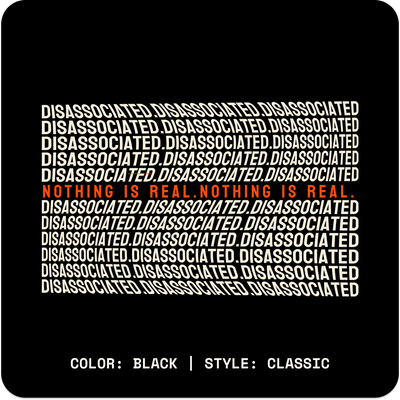
For the ones who said the true thing and watched the room change.
For the ones who know that 'mental health awareness' and actually being treated the same are different things.
For the ones who have a diagnosis they don't mention at work.
What mental health stigma actually is
Stigma is a mark of disgrace — a social signal that something about a person is shameful, dangerous, or incompatible with full membership in the community. Mental health stigma is the application of that mark to people with mental health conditions: the assumptions, judgments, and structural disadvantages that follow from having — or appearing to have — a psychological condition that others treat as a deficiency or a threat.
It operates at multiple levels. There's public stigma: the beliefs that circulate in the broader culture about what mental illness looks like, who it affects, and what it means. There's structural stigma: the way institutions — workplaces, healthcare systems, legal systems — treat people with mental health conditions differently, often at a disadvantage. And there's self-stigma: the internalization of those beliefs, where the person with the condition applies the same judgment to themselves that the culture applies from outside.
Why mental health awareness isn't the same as destigmatization
The last decade has produced a significant increase in mental health awareness. The language has entered mainstream use. The conversations have become more visible. The slogans have proliferated.
What hasn't kept pace: the actual treatment of people who disclose mental health conditions in professional and social contexts.
Telling someone it's okay to not be okay is meaningfully different from creating conditions where not being okay doesn't cost them anything. The first is a statement. The second is structural change. Awareness produces the statement. Destigmatization requires the structural change.
In many workplaces, disclosing a mental health condition still creates real professional risk. In many social contexts, certain kinds of honesty about mental state still change the texture of a relationship in ways that benefit neither party. The awareness has increased. The conditions haven't changed at the same rate. That gap is where stigma continues to live.
The specific costs of stigma
Delayed treatment. People who experience stigma about mental health conditions — either from others or internalized — seek treatment later, less consistently, and with worse outcomes than those who don't. The stigma doesn't just add emotional cost. It directly degrades health outcomes by creating friction between the person and the care they need.
Employment discrimination. Despite legal protections in many jurisdictions, people with known mental health conditions face real disadvantages in hiring, promotion, and retention. The discrimination is rarely explicit. It operates through assumption and informal social evaluation in ways that are difficult to document and harder to challenge.
Relationship burden. Disclosure of mental health conditions in personal relationships can shift the dynamic in ways that place additional load on the person disclosing. The person who is struggling becomes also responsible for managing other people's responses to the fact that they're struggling. Which is additional work in the exact moment when there is least capacity for it.
Self-stigma: the internalized version
Self-stigma is what happens when the external messages — that mental illness is weakness, is permanent, is incompatible with full functioning — get absorbed and applied to the self.
It shows up as: minimizing symptoms (it's not that bad, other people have it worse). Delaying or refusing treatment (I should be able to handle this on my own). Shame about the condition itself. The persistent sense that the condition represents something fundamentally wrong with the person, rather than a health condition that has nothing moral to say about who they are.
Self-stigma is often harder to address than external stigma, because it's internal and therefore feels like an accurate self-assessment rather than an absorbed external message. The voice that says you should be able to handle this doesn't announce itself as stigma. It sounds like honest self-appraisal.
What actual destigmatization requires
Not more slogans. Not more awareness campaigns that end with a hotline number and a week's worth of social media content.
Conditions in which people can disclose mental health conditions and have nothing change as a result. Workplaces where mental health leave is treated the same as physical health leave, without informal social cost. Healthcare systems where mental health receives the same resourcing and seriousness as physical health. Personal relationships where the honest answer to "how are you?" doesn't require a safety calculation.
None of that is produced by a slogan. All of it requires actual structural and cultural change that makes it true, not just stated, that a person's mental health conditions say nothing about their value, their trustworthiness, or their right to full participation in every context they inhabit.
UNINSPIRED makes clothing for the ones who are done performing okay for a world that isn't ready for the real answer. The How Are You? collection asks the question nobody's prepared to answer honestly. Scan the sleeve.