For the ones who've heard "you should believe in yourself more" from people who have no idea what it costs to not.
For the ones who know what the internal voice sounds like and have been unsuccessfully arguing with it for years.
For the ones who'd like an honest account of what this actually is, rather than another list of affirmations.
What Low Self-Esteem Is
Self-esteem is the overall evaluation you hold of yourself — your sense of your own worth, competence, and value as a person. Low self-esteem is when that evaluation is persistently negative: the baseline assumption about yourself is that you're less capable, less worthy, or less deserving than the evidence actually supports.
It's not modesty. Modesty is an accurate or slightly conservative assessment of your strengths. Low self-esteem is a distorted assessment — one that systematically discounts positive evidence and amplifies negative evidence, producing a picture of yourself that is worse than accurate.
It's also not the same as having bad days or doubting yourself in specific contexts. Low self-esteem is the baseline — the default read on yourself that applies across situations and persists regardless of contradicting evidence.
Where It Comes From
Self-esteem is largely built in childhood and adolescence, through the repeated experience of being seen, valued, and responded to. When that experience is present — when the people around you treat you as capable and worthy and responded to your needs — self-esteem develops on a functional foundation.
When it's disrupted — by criticism, neglect, conditional love, environments that repeatedly communicated that you weren't enough, or comparisons that always came out against you — the baseline forms differently.
Low self-esteem is frequently the internal recording of how you were treated before you were old enough to evaluate whether that treatment was accurate. The voice that says you're not enough is usually not your voice originally. It was someone else's, repeated often enough to become the default track.
Other contributors: systemic messages (about your body, your background, your identity) that communicated inferiority. Trauma. Mental health conditions that distort self-assessment, particularly depression. Environments in adulthood that repeated the original dynamics.
What It Does
Low self-esteem is not primarily a feeling. It's a filter.
Compliments get discounted: they don't count, the person was being kind, they'd think differently if they knew more. Failures get amplified: they're evidence of the baseline, proof of what you already knew. Successes get attributed to luck, help from others, or circumstances — everything except your own capacity.
This filter is consistent. Which means the evidence doesn't accumulate in the way it would if the filter weren't present. Years of evidence that contradicts the low self-esteem narrative can exist alongside the narrative unchanged, because the filter is processing all of it through the same lens.
Behaviorally: avoidance of things where failure would confirm the narrative. Over-preparation, perfectionism, or full avoidance. Difficulty accepting care or support. The sense of not deserving good things, or of waiting for good situations to end because they don't fit the baseline.
Why 'Just Believe in Yourself' Doesn't Work
"Believe in yourself" is an instruction to feel differently about yourself. It doesn't account for the fact that the negative self-assessment is running on a filter, not a rational conclusion. You can't argue your way past a filter by insisting the conclusion should be different. The filter will process the new argument through the same lens.
Affirmations don't work for the same reason. Telling yourself you're capable and worthwhile when the baseline read says otherwise produces a contradiction the brain immediately resolves in favor of the baseline. The affirmation bounces off.
What actually creates movement over time is different: consistent, specific evidence that is harder to dismiss. Relationships that provide a different kind of experience than the original ones that formed the baseline. Working with a therapist who addresses the filter itself — schema therapy, CBT, attachment-based approaches — rather than the content of the conclusions it produces.
For the ones who've been trying to believe in themselves through the filter — the problem was never the trying. The filter is the thing. It didn't form because of a failure of belief. And it doesn't dissolve by believing harder.
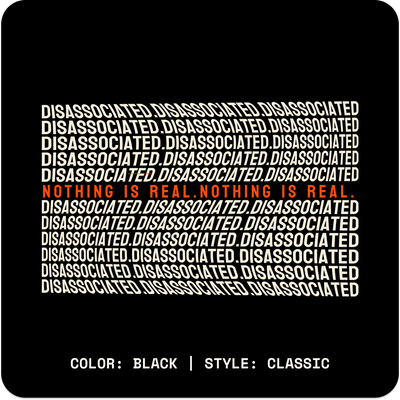
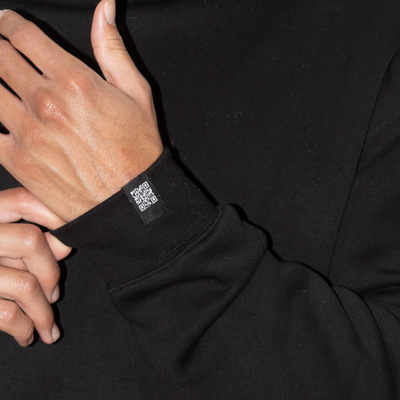
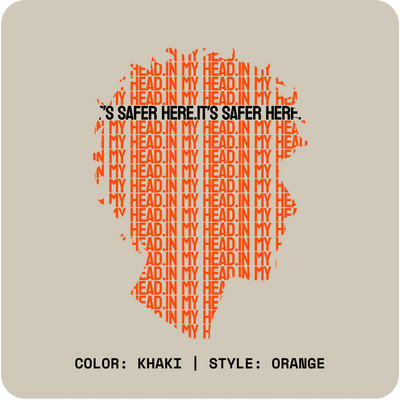
UNINSPIRED makes clothing for the ones who know they're more than the filter says. The Not a Statistic hoodie says what the filter forgot to factor in. Scan the sleeve.