For the ones who went down a rabbit hole and came out three weeks later knowing everything about something they didn't know existed before.
For the ones who have been called obsessive by people who have never felt what it's like to be genuinely lit up by something.
For the ones whose interests don't do anything in half measures.
What hyperfixation actually is
Hyperfixation is the intense, consuming focus that ADHD and some autistic brains bring to a subject of genuine interest — often to the exclusion of other things, including food, sleep, time, and previously scheduled activities. The topic or interest absorbs available attention completely, generating a depth of engagement and knowledge-gathering that most people can't sustain on things they only find moderately interesting.
The term is sometimes used interchangeably with hyperfocus — though in some frameworks, hyperfixation refers specifically to intense interest in a subject or object over time, while hyperfocus refers to the state of being completely absorbed in a task in the moment. The distinction is imprecise, and the experiences overlap significantly.
Why ADHD brains hyperfixate
ADHD brains are highly sensitive to dopamine — or more precisely, to the lack of it. The dopamine system that regulates motivation, attention, and reward doesn't provide reliable access to the dopamine needed to sustain engagement with tasks that are important but not immediately compelling.
What does provide that access: novelty, urgency, genuine interest. When an ADHD brain encounters something that genuinely engages it — something that provides the kind of stimulation that triggers dopamine release — the attention system locks on. The filtering that would normally allow other inputs to interrupt doesn't operate the same way. The engagement is total because the brain has finally found the conditions under which engagement comes naturally rather than requiring effort to manufacture.
Hyperfixation is the ADHD attention system functioning at its highest capacity — not a failure mode, but a feature. Channeled at the right target, it produces extraordinary depth. The problem is that it doesn't reliably channel at the right target on demand.
What hyperfixation looks like
The topic arrived. Maybe it was random — a video that appeared in a feed, a passing mention in a conversation, a book someone handed you. Within days, you've watched every documentary, read every article, know the terminology, the history, the debates. You're bringing it up in conversations. You're thinking about it while doing unrelated things. People who interact with you regularly are aware that This Is The Current Thing.
The intensity can be alarming to people who don't experience it. It looks like obsession. It looks disproportionate. It looks like you've lost the ability to think about anything else, which is — temporarily — not entirely inaccurate.
And then, often somewhat abruptly: it fades. The interest doesn't disappear entirely but it loses the consuming quality. The brain moves on — sometimes to the next fixation, sometimes back to a broader baseline. The knowledge stays. The intensity doesn't.
The grief at the end
People who experience hyperfixation often describe a specific quality of loss when the fixation ends. Not dramatic. But real.
When you're in a hyperfixation, everything has that quality of being lit from inside — the topic generates meaning, engagement, a specific pleasure of sustained interest that is qualitatively different from ordinary engagement. When it ends, the thing that provided that quality is gone, and what's left is the ordinary level of engagement that felt insufficient before the fixation arrived.
This cycle is one of the reasons ADHD brains are constantly looking for the next interest — not because they're incapable of commitment, but because the experience of being genuinely lit up by something is specific and real, and the absence of it is felt as a kind of flatness that the brain is always, in some way, trying to resolve.
When hyperfixation becomes a problem
When the thing being fixated on isn't good for you. When it's consuming resources — time, money, sleep, relationships — that the fixation itself doesn't register as important because it's providing what the brain needs at the neurochemical level. When the inability to modulate the interest starts producing real-world costs that aren't being accounted for because the fixation has narrowed available attention.
That's not a character flaw. It's a feature of the attention system operating without the regulatory support it needs. And it's worth knowing the difference between the fixation being good for you and the fixation being good for the dopamine system while costing something else.
What hyperfixation produces, at its best
Expertise. Depth. The kind of knowledge that comes from spending two hundred hours on something most people engage with superficially. Creative output that draws on that depth. Connection with the rare people who share the fixation and for whom conversation about it is the most alive they feel in a social situation.
The ADHD brain at peak engagement is not a liability. It's a specific kind of processing power that most people can't access, pointed at the things that earned it. The fixation isn't the problem to be managed. It's information about what the brain has the most capacity to do when it has what it needs to do it.
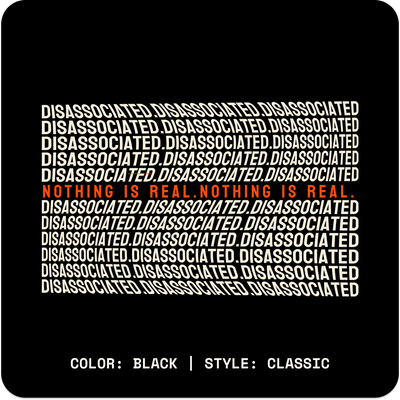
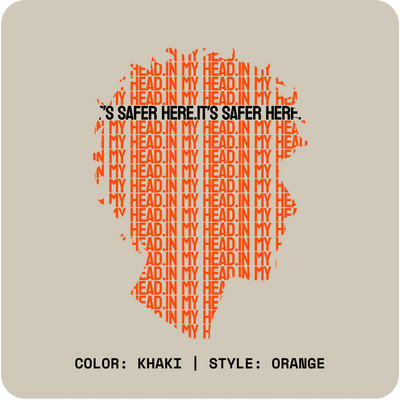
UNINSPIRED makes clothing for the ones who don't do anything in half measures. The ADHD collection names the intensity without asking you to tone it down. Scan the sleeve.