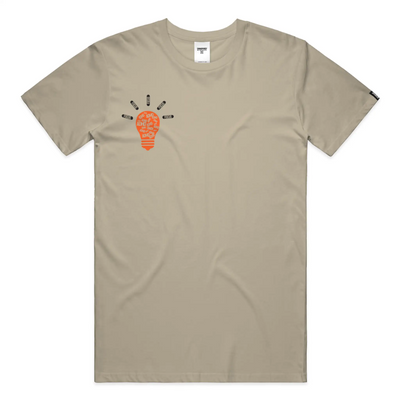
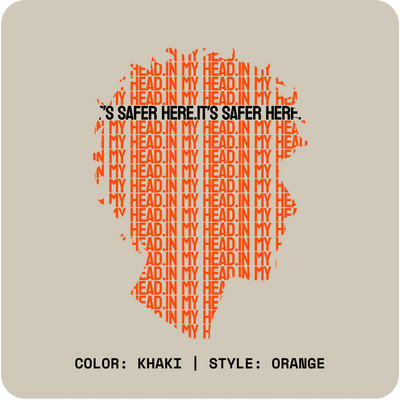
For the ones who are described as "put-together" while their brain is running disaster simulations in the background.
For the ones who don't look like what people think anxiety looks like.
For the ones who keep being told they're fine — by people looking at the output, not the cost.
What high functioning anxiety actually means
High functioning anxiety isn't a clinical diagnosis — it's a descriptive term for anxiety that doesn't produce the visible markers most people associate with anxiety disorders. No obvious paralysis. No outward panic. Often, the opposite: productivity, reliability, achievement, a relentless work ethic, an impeccable social performance.
The anxiety is real. It's simply being managed in a way that looks functional from the outside — and is often costing significantly more than it appears.
What the inside looks like
The internal experience of high functioning anxiety has a specific texture that's hard to describe to people who haven't had it.
It's a constant background hum — a persistent, low-grade alertness that never fully turns off. The sense that something could go wrong, might go wrong, probably is going wrong somewhere that hasn't been caught yet. The scanning. The replaying of conversations. The preparation for scenarios that have a 2% chance of occurring.
It's the 3am wake-up that doesn't have a specific cause — just a generalized sense of unease that sits on the chest until the alarm goes off.
It's the difficulty tolerating uncertainty. The need to know outcomes before they've happened, to control variables that can't be controlled, to prepare so thoroughly that there's no room left for things to go differently than planned.
And then: showing up, doing the work, responding to the email, completing the project on time, being described as one of the most reliable people in the room. While none of what's happening internally is visible to anyone outside.
Why it gets missed
The dominant image of anxiety — the one that gets clinical attention and social recognition — is one of visible impairment. Difficulty leaving the house. Panic attacks. Avoidance of situations. Disrupted functioning.
High functioning anxiety doesn't present that way. It presents as competence. Which means it often doesn't get named, doesn't get support, and doesn't get taken seriously — by professionals, by the people around the person, or by the person themselves.
The internal bar for whether anxiety counts tends to be: am I still functioning? If yes, then maybe it's just who I am. Maybe this is just how everyone feels. Maybe I'm sensitive, or dramatic, or not managing my stress well enough.
The costs of high functioning anxiety — the exhaustion, the chronic tension, the narrowing of spontaneity and ease, the physical toll of sustained hypervigilance — often get absorbed silently, attributed to personality, or treated as evidence of a need to try harder at relaxation.
Anxiety as fuel: why it works until it doesn't
Part of what makes high functioning anxiety hard to identify and address is that it works, in the short term, as a motivational strategy.
The anxiety about failure produces thorough preparation. The anxiety about disappointing people produces consistent follow-through. The anxiety about being wrong produces careful, detailed work. From the outside, this reads as drive, conscientiousness, and professionalism. From the inside, it's dread doing the work that motivation was supposed to do.
The problem: dread is not a sustainable fuel source. It doesn't replenish the way genuine engagement does. It depletes the system quietly, over time, until the same outputs require more and more effort to sustain — and the gap between what's visible and what the maintenance costs are getting larger.
The crash, when it arrives, often confuses everyone around the person. They seemed so capable. They were doing so well. What happened?
What happened is that the system ran the math, and the math ran out.
The perfectionism connection
High functioning anxiety and perfectionism are closely linked — not because anxious people are perfectionists by choice, but because perfectionism is a management strategy for anxiety.
If everything is done correctly, there's less to be anxious about. If there are no loose ends, fewer things can go wrong. If the work is flawless, the criticism can't land. Perfectionism is an attempt to close the gap between the current state and a hypothetical safe state — one where all the things that might happen bad already can't, because you've addressed every possible angle.
The gap never fully closes. That's not a feature of imperfect execution. It's a feature of anxiety — which is not, at its root, a logical response to actual threats, but a nervous system that has been set to a higher-than-necessary alert level.
Am I okay? is the right question
Not "am I functioning?" Functioning is a low bar and a misleading one. People function through a lot of things that aren't okay.
The real question is: what is the experience actually costing? What has been quietly absorbed, normalized, pushed through, performed past? What would it feel like if the background hum turned off — and is there even a memory of that?
High functioning anxiety is still anxiety. The achievement it produces doesn't cancel out the experience that's fueling it. The fact that it looks okay from the outside doesn't make it okay on the inside.
The question isn't whether you can keep going. It's whether you want to keep going like this.
UNINSPIRED makes clothing for the ones who have mastered looking okay. The Am I Okay? collection asks what no one else is asking. Scan the sleeve.