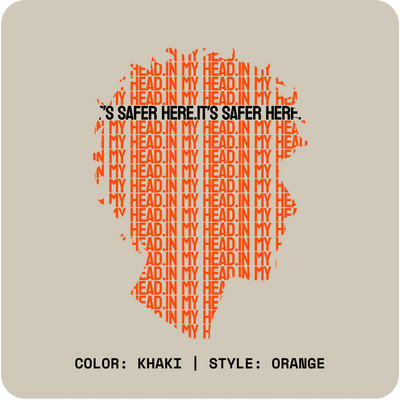
For the ones who sat in front of the task for three hours and produced nothing.
For the ones who can explain exactly what needs to happen and still can't make themselves do it.
For the ones who have heard "you're so smart, why can't you just..." more times than they can count.
What executive dysfunction actually is
Executive functions are the cognitive processes that govern how you plan, start, organize, shift between, and follow through on tasks. They're the management layer of the brain — not intelligence, not capability, but the systems that translate intention into action.
Executive dysfunction is when those systems don't operate the way they're supposed to. The result is a specific, maddening gap: you know what needs to be done, you understand why it matters, you may genuinely want to do it — and you cannot bridge the distance between knowing and doing.
That gap is not laziness. It's not a character flaw, a values problem, or evidence of not caring enough. It's a neurological failure of a specific cognitive system to fire at the right moment in the right sequence.
Why it's common in ADHD
Executive dysfunction is one of the core features of ADHD — arguably more central to the actual experience of ADHD than attention problems, which are often themselves downstream of executive dysfunction.
The mechanism involves dopamine regulation. Dopamine is one of the primary neurotransmitters involved in motivation, reward anticipation, and task initiation. ADHD brains don't process dopamine the same way neurotypical brains do — there's less available for certain kinds of tasks, and the way it gets released is different.
What this means practically: the neurotypical brain has a more reliable system for initiating tasks that are important but not immediately interesting. It can act on the knowledge that something matters without needing the task itself to generate its own motivation. ADHD brains often can't. They need the dopamine to come from somewhere — from urgency, from genuine interest, from novelty, from external pressure — or the initiation system just doesn't fire.
This is why ADHD can produce the seemingly paradoxical experience of hyperfocus on some things and paralysis on others. It's not about effort or will. It's about whether the system has what it needs to start.
Task initiation: the specific wall
Of all the components of executive dysfunction, task initiation is often the one that creates the most friction — and the most confusion for people on the outside.
Task initiation is exactly what it sounds like: the ability to begin. To translate "I should do X" into actually doing X. For most people, this transition is largely automatic. The need arises, the brain signals the relevant action, the body follows.
For someone with ADHD, the initiation signal often doesn't fire. Or fires and stops. Or fires and gets interrupted by another signal. The person knows the task is there. They may be actively thinking about the task. They may be experiencing real distress about not doing the task. And they still cannot begin.
From the outside, this looks like avoidance, procrastination, or not caring. From the inside, it's more like standing at the edge of a diving board with your legs not working. The jump is simple. You understand the jump. You want to jump. Nothing is happening.
The urgency exception — and why it makes things worse
One of the most disorienting features of executive dysfunction is that it often disappears under sufficient urgency.
A deadline that's three weeks away generates paralysis. The same deadline at 11pm the night before generates a sudden, productive sprint.
This leads to a damaging misread: if you can do it under pressure, you must be able to do it without pressure. If you finished the report at 2am, you had the capacity all along. You were just choosing not to use it.
But urgency doesn't demonstrate choice. Urgency provides the dopamine that the brain needed to initiate. The adrenaline of an imminent deadline substitutes for the regulatory system that should have been available all along but wasn't. The sprint doesn't prove the paralysis was optional — it proves the brain found a workaround.
The problem with relying on urgency: it's unsustainable, it creates chronic stress, and it tends to produce lower quality output than a brain that could have started at a reasonable pace. It's not a strategy. It's a coping mechanism that also carries costs.
What executive dysfunction looks like across a day
Getting to the task you most need to do by doing seventeen other things first, none of which were on the list.
Opening the email. Closing the email. Opening the email again. Not replying.
The pile — physical or digital — of things that need to be dealt with and have not been dealt with, not because you don't know they exist, but because the initiation never fires.
Being asked "why didn't you just..." about something that you couldn't just. Knowing the answer and not being able to give it in a way that lands.
The shame layer
Executive dysfunction doesn't happen in a vacuum. It happens in a world that has decided the gap between knowing and doing is a moral failure.
You get told you're not living up to your potential. That you're your own worst enemy. That you'd be capable of so much if you just applied yourself. You get graded on follow-through in systems designed for people whose follow-through systems work the way the system assumes they do.
The shame that accumulates from years of being judged against a standard your brain can't reliably meet — that's its own load. And it tends to make executive dysfunction worse, because shame activates the nervous system in ways that further impair the executive functions needed to actually do the thing.
What helps
External structure. Body doubling. Breaking initiation into a smaller first step so small it barely counts as starting — because often, starting is the only thing that needs to happen and the rest follows. Removing friction from the path between intention and action. Creating the conditions for dopamine that the brain isn't generating internally.
Not "just try harder." Not "everyone struggles with motivation sometimes." Systems that account for how this specific brain actually operates — rather than how it's supposed to.
UNINSPIRED makes clothing for the ones whose brains came with different wiring. The ADHD collection names what most people can't explain. Scan the sleeve.