For the ones who ask how everyone else is doing without being asked back.
For the ones who manage the room's emotional temperature without the room knowing it's being managed.
For the ones who are tired in a way that work doesn't explain and rest doesn't fix.
What emotional labor actually is
The term was introduced by sociologist Arlie Hochschild in 1983, initially in the context of paid work — specifically, the management of one's own feelings as part of a job. Flight attendants trained to maintain warmth regardless of how passengers treat them. Debt collectors trained to project authority regardless of their personal comfort with confrontation. The performance of the emotion the job requires, separate from the emotion the person actually feels.
The concept has expanded significantly since then. It now encompasses the broader practice of managing one's own emotional expression and, relatedly, monitoring and managing other people's emotional states — in workplaces, in relationships, in family systems, in any social context where emotions are in play and someone is doing the work of managing them.
That work is real. It has cognitive and emotional cost. And it is distributed very unevenly — along gender lines, along race lines, along hierarchy lines, and along the lines of who learned early that their job was to keep other people's feelings in order.
What emotional labor looks like in practice
Noticing that someone in the meeting is upset and calibrating the conversation accordingly without making it obvious you noticed. Knowing when your partner is stressed before they've said anything and adjusting your behavior preemptively. Being the person in the friend group that everyone calls when something goes wrong — not because you volunteered, but because it was gradually assumed.
Softening feedback so the recipient can hear it. Managing your own visible frustration so the client doesn't feel the friction. Producing warmth, reassurance, and attentiveness on demand, regardless of your actual internal state. Performing the emotion the situation requires rather than the emotion you have.
Remembering the birthdays, tracking who needs to be followed up with, keeping a mental model of everyone's emotional state and needs — without anyone having assigned that task, without anyone acknowledging that it's being done.
Why it often goes unrecognized
Emotional labor is invisible precisely because it's done well. When someone is successfully managing the emotional texture of a room or a relationship, no one notices the management — they just experience the smoothness it produces. The effort that went into producing that smoothness is attributed to personality, to being a natural caregiver, to "just being good with people" — not to labor.
This invisibility is also why it's rarely compensated or reciprocated. You can't ask for recognition for work that the other party doesn't know was happening. You can't negotiate a more equitable distribution of effort that was never acknowledged as effort.
The cumulative cost
Emotional labor is fatiguing in ways that are hard to locate. The fatigue isn't from a specific moment — it's accumulated across thousands of small adjustments, performances, and attentiveness acts that each cost a little and none of which had a visible toll.
The person who does a lot of emotional labor is often the one who has the least visible reason to be exhausted. They weren't in back-to-back meetings. They didn't do physical work. They just — somehow — are depleted in a way that's hard to explain and harder to justify out loud.
Over time, chronic emotional labor without reciprocity or recognition produces resentment. Not dramatic, not directed — just a low-level wearing away of willingness. The person who has been managing everyone else's feelings for years eventually reaches a capacity threshold, often in ways that confuse the people around them, who weren't tracking the depletion because they couldn't see the work.
Who does it and why
Research consistently shows that emotional labor is distributed unequally by gender. Women in workplaces are expected to perform more emotional labor, are evaluated more harshly when they don't, and receive less explicit recognition when they do. The same pattern appears in domestic contexts, in caregiving contexts, and in social groups.
Race adds another layer. People of color in predominantly white environments often carry the additional emotional labor of managing white people's discomfort around race — responding to microaggressions without reacting, educating without frustration, representing an entire category of people with warmth when the situation calls for the opposite.
And separately from demographics: people who learned early that managing other people's emotions was their responsibility will do this regardless of structural context. The person who grew up as the emotional regulator in a chaotic household doesn't stop doing that work when they enter adulthood. The skill is there. The habit is there. And often the sense that it's simply what they do is there too — rather than the recognition that it's labor they're choosing to provide.
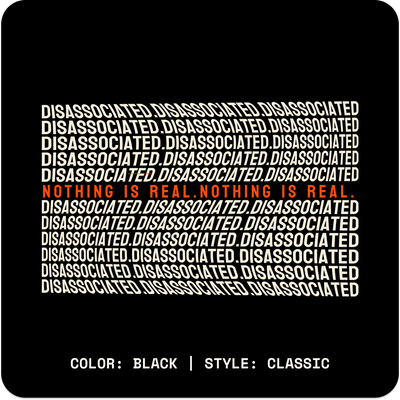
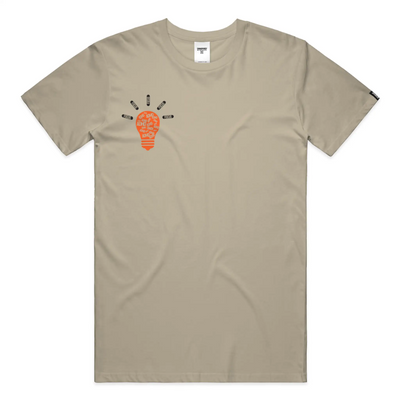
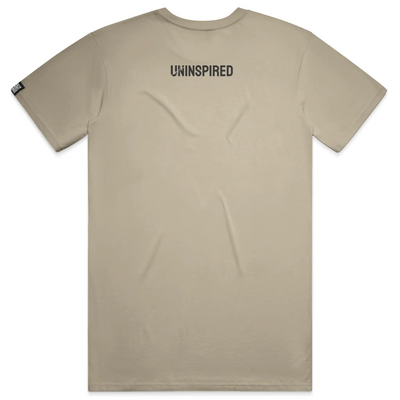
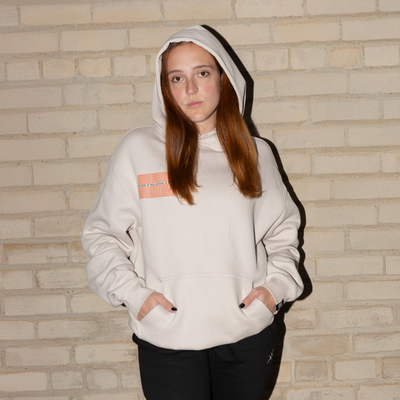
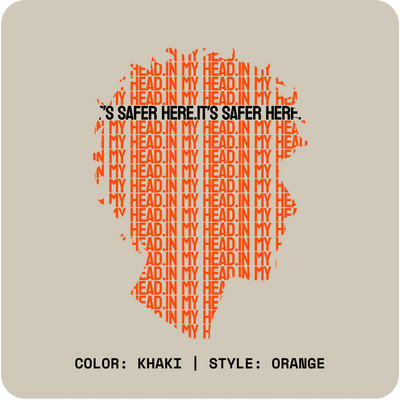
UNINSPIRED makes clothing for the ones who are exhausted from work no one can see. The I'm Fine collection names the performance underneath the performance. Scan the sleeve.