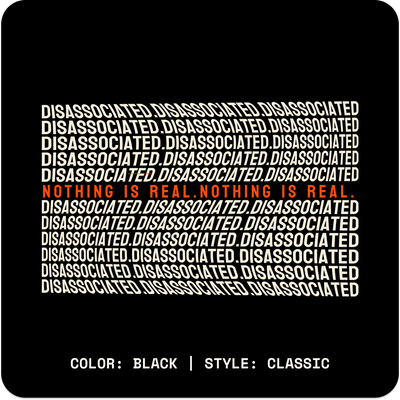
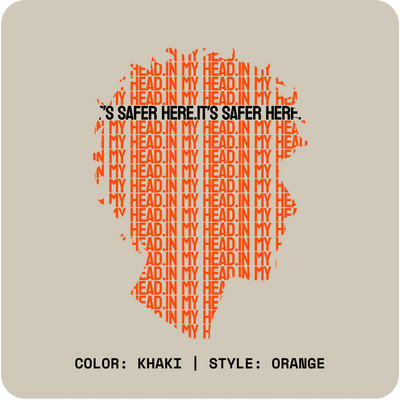
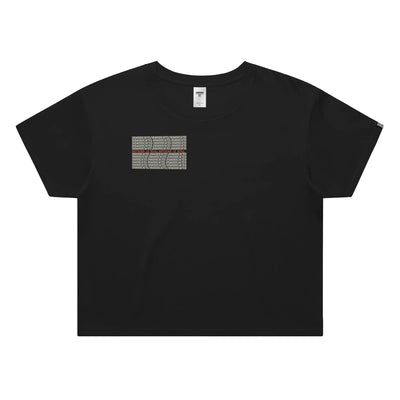
For the ones who feel everything at full volume.
For the ones who have been called too sensitive for having the normal response at the wrong intensity.
For the ones who know the reaction was too much and couldn't stop it anyway.
What emotional dysregulation actually means
Emotional dysregulation is the difficulty modulating emotional responses in proportion to the situation — the experience of emotions arriving with more intensity, shifting more rapidly, or being harder to recover from than the context would typically warrant.
It's not a character flaw. It's not immaturity. It's a neurological pattern — most commonly associated with ADHD, borderline personality disorder, PTSD, anxiety disorders, and bipolar disorder, though it appears across a much wider range of conditions and contexts.
The core feature: the emotional brake system doesn't operate the way it's supposed to. Emotions that would be filtered, dampened, or moved through more quickly by a regulated nervous system instead land at full intensity and stay there longer than expected.
What it looks like from the inside
A criticism — small, fairly routine — hits with the force of something catastrophic. You know, in some part of your mind, that the scale is off. The awareness doesn't change the experience.
Joy lands intensely too — the highs as outsized as the lows. The problem isn't a bias toward negative emotion. It's a general volume issue: everything comes in louder, with less buffer between stimulus and response.
Frustration converts to anger faster than seems reasonable. Disappointment becomes devastation. Embarrassment becomes shame that doesn't lift for days. The emotional response arrives before the thinking brain has had a chance to weigh in — and by the time it does, the reaction has already happened.
Why ADHD and emotional dysregulation overlap
Emotional dysregulation is one of the most underrecognized features of ADHD — underrecognized partly because it wasn't historically included in the diagnostic criteria, and partly because the focus on attention and hyperactivity has consistently overshadowed the emotional component.
But the overlap is significant. ADHD involves difficulty with inhibitory control — the capacity to pause between stimulus and response, to interrupt an automatic reaction before it executes. This applies to behavior and also to emotion. The emotional response fires, the inhibitory system doesn't catch it in time, and the result is a reaction that's larger or faster than the person would have chosen if they'd had more processing time.
ADHD also involves a different relationship with emotional memory. Past experiences — particularly experiences of failure, rejection, or shame — can be triggered more easily and with more intensity. The amygdala, which processes emotional threat, tends to be more reactive. The prefrontal cortex, which would normally modulate that reactivity, has a less reliable connection to the process.
Rejection and the specific sharpness of RSD
Rejection Sensitive Dysphoria is a specific feature of emotional dysregulation common in ADHD — an acute, intense emotional response to perceived or actual rejection, criticism, or failure to meet a standard.
The word "dysphoria" is deliberate: the emotional pain produced by rejection in RSD is not mild disappointment. It's been described as one of the most intense emotional experiences in the ADHD profile — sudden, overwhelming, and difficult to rationalize away even when the person fully understands that the response is disproportionate.
RSD produces avoidance. If rejection is going to hurt that much, the rational strategy is to engineer a life with as few rejection opportunities as possible. Which means not applying. Not trying. Not sharing. Not saying the thing. An enormous amount of unexpressed potential quietly compressed to fit inside a tolerance for pain that most people don't know is running.
What emotional dysregulation is not
It's not choosing to react. It's not being dramatic. It's not manipulation, attention-seeking, or a failure of character.
The person experiencing emotional dysregulation often knows, in real time, that the response is outsized. That knowledge doesn't give them access to a different response. The knowing and the feeling are happening in different parts of the brain, on different timescales, and the feeling is faster.
What looks like a choice — from the outside, from someone who doesn't have this — is not experienced as a choice from the inside. It's experienced as something happening that the person cannot reliably interrupt.
Regulation is a skill, and it can be learned
The nervous system's capacity to regulate is not fixed. It's developmental, and it can be developed later than the standard window.
This doesn't happen through willpower or telling yourself to calm down — those approaches activate exactly the systems that are already dysregulated. It happens through specific, practiced techniques that work with the nervous system rather than against it: grounding, co-regulation, titrated exposure to emotional triggers, building the gap between stimulus and response through repeated practice.
It's slow. It requires the right support. It doesn't produce a person whose emotions arrive at a different volume — it produces a person who has more tools for what to do when they arrive that loud.
UNINSPIRED makes clothing for the ones who feel everything at a frequency most people can't hear. The Overstimulated collection doesn't ask you to turn it down. Scan the sleeve.