For the ones who watched something beautiful and waited for a feeling that didn't come.
For the ones who should have been happy — by every reasonable measure — and couldn't locate it.
For the ones who aren't sad exactly, just not quite there.
What Emotional Blunting Is
Emotional blunting is a reduction in the range, intensity, or accessibility of emotional experience. Not the absence of emotion — more like emotion with the volume turned down. Things that should register don't fully register. Things that should move you pass through you without catching. You're present for experiences that should feel significant, and you feel them — but at a remove. Through something.
It shows up in different contexts: as a feature of depression, as a side effect of certain medications (particularly antidepressants and antipsychotics), as a response to trauma or chronic stress, as a dissociative phenomenon, or as part of neurodivergent experience. The mechanism varies. The experience has consistent features regardless of cause: less range, less intensity, a quality of watching your own life from a few degrees of distance.
Blunting is different from numbness — numbness implies the complete absence of feeling. Blunting is more subtle. The feelings are there. They're just smaller than they should be. Softer. Less accessible. And that gap between what you're feeling and what you think you should be feeling is its own kind of discomfort.
Why It's Hard to Name
Emotional blunting is genuinely difficult to articulate — partly because it involves the absence of something rather than the presence of something, and absences are harder to describe. You can point to sadness or anxiety or rage. You can't as easily point to the space where a feeling should be and explain why that space being there is a problem.
People close to you might not notice. From the outside, blunting often looks calm. Stable. Regulated. The person who doesn't get too high or too low — who handles difficult situations without falling apart, who doesn't seem to be affected by things as much as others. The perception of emotional stability can mask a significant reduction in actual emotional range.
And because the blunting doesn't look like suffering from the outside, it's hard to advocate for changing. You're functional. You're showing up. The flatness isn't visible. But you know it's there. And you know that something that used to be present isn't anymore.
Emotional Blunting and Medication
One of the most common and underacknowledged causes of emotional blunting is psychiatric medication — particularly SSRIs and SNRIs, which are widely prescribed for depression and anxiety. These medications are effective for many people at reducing the lows. But a significant proportion of people also experience a reduction in the highs — a narrowing of the full emotional range that extends beyond just the targeted symptoms.
The experience is often described as: the depression is gone, but so is everything else. The anxiety is quieter, but so is the joy. The medication worked — and also took something with it.
This is a recognized side effect that is significantly underreported — partly because people don't want to stop taking medication that's working, and partly because the flatness is harder to describe and quantify than the original symptoms. If you're experiencing this: it's worth naming with your prescriber. It's addressable. Sometimes through dosage adjustment, sometimes through switching medications, sometimes through adjunct approaches. You don't have to accept flatness as the trade-off for stability.
Emotional Blunting and Trauma
Chronic exposure to overwhelming emotion — the sustained stress of difficult environments, ongoing trauma, high-demand situations with no relief — can produce emotional blunting as a protective adaptation. The nervous system, operating under sustained load, essentially turns the volume down to prevent overflow.
This makes functional sense in the short term. Emotional blunting under acute threat preserves the capacity to function. The problem is that the dampening often persists past the threat. The environment changes; the system doesn't automatically recalibrate. The protective reduction in emotional range that made sense during the difficult period stays in place — and now you're experiencing life at reduced volume when there's nothing left to protect yourself from.
In trauma contexts, emotional blunting is often part of a broader dissociative response — emotional detachment from experience as a distance-creating mechanism. Effective trauma-focused treatment typically addresses both the underlying trauma and the protective patterns that developed in response to it.
What's Actually Missing
Usually: the positive end of the range. Emotional blunting tends to affect positive emotions more significantly than negative ones — the delight, the excitement, the moments of genuine pleasure and connection. The lows may still register; the highs go quiet. Which means you can still feel bad, but feeling good is harder to access. The asymmetry is its own kind of heaviness.
What's also missing: the feeling of being fully in your own experience. That sense of contact with the present moment — of things landing and mattering and moving you — is reduced. You're present, technically. But not quite in it. Not the way you remember being in it. Not the way other people seem to be.
Noticing the Gap
The most useful thing is noticing that the gap exists and naming it as a gap rather than as normal. Accepting a flattened emotional range as "just how I am" forecloses the question of whether it needs to be. It might be situational. It might be medication-related. It might be a trauma response that's outlived the conditions that produced it. It might be something worth investigating.
You don't have to settle for the glass between you and your own life. Naming that the glass is there is the first step toward asking why.
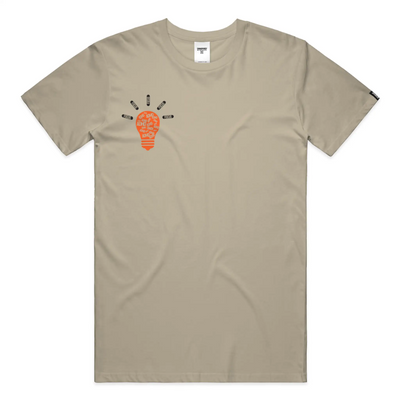
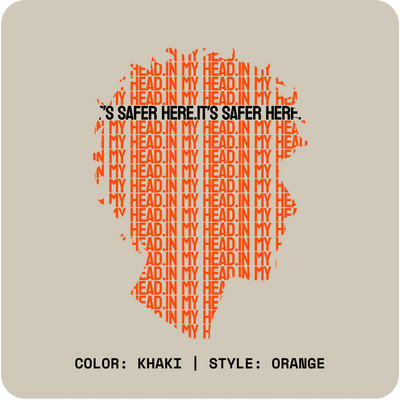
UNINSPIRED makes clothing for the ones who know what it's like to be present and somewhere else at the same time. The Disassociated collection is for the ones experiencing life slightly sideways. Scan the sleeve.