Digital Burnout: What Happens When You Can Never Be Offline

For the ones who put their phone down and immediately picked it up again.

For the ones who are tired of content and can't stop consuming it.

For the ones who haven't been fully present in a room in longer than they can remember.

What digital burnout actually is

Digital burnout is the specific exhaustion produced by sustained, high-frequency engagement with digital environments — social media, messaging platforms, news feeds, notifications, the constant ambient availability of more content, more information, more input than any nervous system was designed to process.

It shares features with burnout broadly: depletion, cynicism, reduced capacity for engagement. But it has its own specific character, produced by a specific mechanism: the brain's reward system being subjected to near-continuous low-level stimulation that is optimized, algorithmically, to keep triggering the next engagement before the last one has fully processed.

What constant connectivity does to the nervous system

The human nervous system evolved to handle a particular level of information density. The current environment exceeds that level by several orders of magnitude — not occasionally, but continuously, as a baseline state.

Each notification is a small interrupt. Each scroll is a rapid sequence of context shifts — grief, humor, outrage, advertisement, political crisis, someone's lunch, breaking news — with no space between them for any individual piece to actually land. The brain processes these as separate events requiring separate responses, while the content keeps arriving before any response has completed.

The result is a nervous system in a state of continuous, low-level activation. Not fight-or-flight — too mild for that. But not the settled, present, regulated state that allows for genuine rest, attention, or connection. A middle state: alert but not focused, stimulated but not engaged, tired but unable to land.

Gen Z, the always-online generation

Gen Z didn't grow up with the internet as a tool you used and then put down. It was ambient — always present, always accessible, always generating input. The phone was there in childhood before the capacity to evaluate what it was doing to the nervous system had fully developed.

The result: a generation for whom the offline state is not a default to return to, but an active choice that requires effort against a default of always-on. The discomfort of a pocket that has nothing in it. The pull, when sitting with nothing, to reach for the device that is always there with something.

That pull isn't weakness or addiction in the clinical sense (for most people). It's a trained behavior pattern, reinforced by systems specifically designed to produce it — systems whose business model depends on attention, and which have become very good at capturing it.

Social media and mental health: what the research actually says

The relationship between social media and mental health is more nuanced than either extreme claims. It's not that social media is inherently harmful, and it's not that the concerns are overblown.

Passive consumption — scrolling through other people's curated presentations of their lives without interacting — is consistently associated with worse outcomes than active use: messaging, creating, connecting. The mechanism is probably comparison: the constant availability of optimized highlights from hundreds of other lives, compared against unoptimized experience of your own, tends to distort the baseline for what life is supposed to look like.

For people with pre-existing anxiety, the news feed is a particular problem. The algorithm surfaces content that provokes strong emotional responses — because strong emotional responses produce engagement. That means more crisis, more outrage, more division, more content specifically calibrated to produce the physiological state of threat. For an anxious nervous system that's already running hot, this is adding accelerant.

What screen fatigue actually is

Screen fatigue isn't primarily about the eyes. It's about sustained cognitive demand — the processing required to navigate multiple simultaneous contexts, respond to continuous input, and manage the social and emotional load of digital interaction.

Reading a long book and reading a feed for the same amount of time are not equivalently fatiguing. The book is a single, sustained context. The feed is hundreds of separate contexts, each requiring a small recalibration. The aggregate cognitive cost is higher for the feed — which is partly why many people report being more exhausted after two hours of scrolling than after two hours of almost anything else.

Offline as a choice rather than a default

Being offline used to be the default. You went online. Now, the default is online and going offline is an active decision that requires opting out of a system that is specifically designed to prevent opting out.

The design of these systems is not neutral. The notifications, the infinite scroll, the variable reward schedule of social media (sometimes you post something and it does nothing; sometimes it resonates; you never know which) — these are engagement mechanisms, not incidental features. They are the product.

Going offline in this context is not a personality trait or a wellness trend. It's the deliberate creation of conditions in which the nervous system can actually regulate. The quiet that allows for genuine rest. The presence that allows for actual connection. The space in which the content can't arrive before the last piece has had a moment to settle.


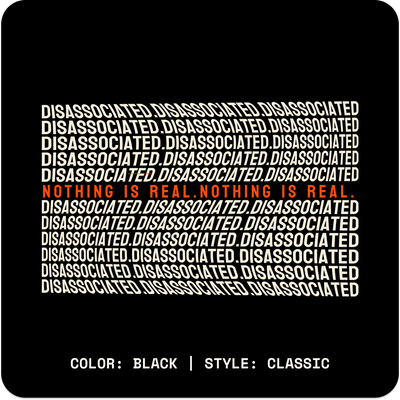
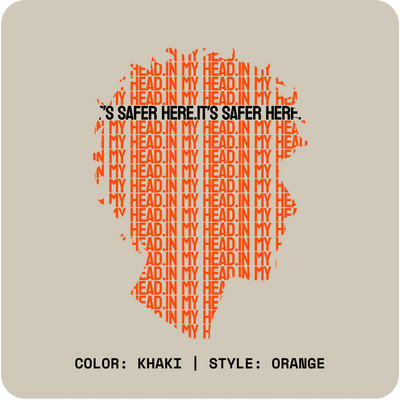
UNINSPIRED makes clothing for the ones who are overwhelmed by a world that won't stop generating input. The Offline collection is the word for what it feels like to want out. Scan the sleeve.

Digital Burnout: What Happens When You Can Never Be Offline

For the ones who put their phone down and immediately picked it up again.

For the ones who are tired of content and can't stop consuming it.

For the ones who haven't been fully present in a room in longer than they can remember.

What digital burnout actually is

Digital burnout is the specific exhaustion produced by sustained, high-frequency engagement with digital environments — social media, messaging platforms, news feeds, notifications, the constant ambient availability of more content, more information, more input than any nervous system was designed to process.

It shares features with burnout broadly: depletion, cynicism, reduced capacity for engagement. But it has its own specific character, produced by a specific mechanism: the brain's reward system being subjected to near-continuous low-level stimulation that is optimized, algorithmically, to keep triggering the next engagement before the last one has fully processed.

What constant connectivity does to the nervous system

The human nervous system evolved to handle a particular level of information density. The current environment exceeds that level by several orders of magnitude — not occasionally, but continuously, as a baseline state.

Each notification is a small interrupt. Each scroll is a rapid sequence of context shifts — grief, humor, outrage, advertisement, political crisis, someone's lunch, breaking news — with no space between them for any individual piece to actually land. The brain processes these as separate events requiring separate responses, while the content keeps arriving before any response has completed.

The result is a nervous system in a state of continuous, low-level activation. Not fight-or-flight — too mild for that. But not the settled, present, regulated state that allows for genuine rest, attention, or connection. A middle state: alert but not focused, stimulated but not engaged, tired but unable to land.

Gen Z, the always-online generation

Gen Z didn't grow up with the internet as a tool you used and then put down. It was ambient — always present, always accessible, always generating input. The phone was there in childhood before the capacity to evaluate what it was doing to the nervous system had fully developed.

The result: a generation for whom the offline state is not a default to return to, but an active choice that requires effort against a default of always-on. The discomfort of a pocket that has nothing in it. The pull, when sitting with nothing, to reach for the device that is always there with something.

That pull isn't weakness or addiction in the clinical sense (for most people). It's a trained behavior pattern, reinforced by systems specifically designed to produce it — systems whose business model depends on attention, and which have become very good at capturing it.

Social media and mental health: what the research actually says

The relationship between social media and mental health is more nuanced than either extreme claims. It's not that social media is inherently harmful, and it's not that the concerns are overblown.

Passive consumption — scrolling through other people's curated presentations of their lives without interacting — is consistently associated with worse outcomes than active use: messaging, creating, connecting. The mechanism is probably comparison: the constant availability of optimized highlights from hundreds of other lives, compared against unoptimized experience of your own, tends to distort the baseline for what life is supposed to look like.

For people with pre-existing anxiety, the news feed is a particular problem. The algorithm surfaces content that provokes strong emotional responses — because strong emotional responses produce engagement. That means more crisis, more outrage, more division, more content specifically calibrated to produce the physiological state of threat. For an anxious nervous system that's already running hot, this is adding accelerant.

What screen fatigue actually is

Screen fatigue isn't primarily about the eyes. It's about sustained cognitive demand — the processing required to navigate multiple simultaneous contexts, respond to continuous input, and manage the social and emotional load of digital interaction.

Reading a long book and reading a feed for the same amount of time are not equivalently fatiguing. The book is a single, sustained context. The feed is hundreds of separate contexts, each requiring a small recalibration. The aggregate cognitive cost is higher for the feed — which is partly why many people report being more exhausted after two hours of scrolling than after two hours of almost anything else.

Offline as a choice rather than a default

Being offline used to be the default. You went online. Now, the default is online and going offline is an active decision that requires opting out of a system that is specifically designed to prevent opting out.

The design of these systems is not neutral. The notifications, the infinite scroll, the variable reward schedule of social media (sometimes you post something and it does nothing; sometimes it resonates; you never know which) — these are engagement mechanisms, not incidental features. They are the product.

Going offline in this context is not a personality trait or a wellness trend. It's the deliberate creation of conditions in which the nervous system can actually regulate. The quiet that allows for genuine rest. The presence that allows for actual connection. The space in which the content can't arrive before the last piece has had a moment to settle.


UNINSPIRED makes clothing for the ones who are overwhelmed by a world that won't stop generating input. The Offline collection is the word for what it feels like to want out. Scan the sleeve.


0 comments

Leave a comment

Please note, comments must be approved before they are published

Favorites

Our most popular looks of the season

Relevant Product