For the ones who have a system and aren't sure it's working.
For the ones who know the difference between managing and processing and have been managing for years.
For the ones whose coping mechanisms have coping mechanisms.
What coping mechanisms actually are
Coping mechanisms are the strategies — conscious or automatic — that people use to manage stress, distress, and difficult emotional experiences. Everyone has them. The question isn't whether you cope, it's how, and what the coping is actually doing.
Not all coping is created equal. Some strategies genuinely process the difficulty — move it through the system, reduce its load, integrate the experience. Others manage the difficulty — keep it at arm's length, prevent it from overwhelming the moment, buy time. Both have their place. The problems arrive when management strategies become the only tools available, and processing never happens.
The difference between processing and managing
Processing means the difficult thing gets engaged with — felt, examined, contextualized, moved through. It's uncomfortable. It takes longer than managing. And at the end of it, the load is genuinely lighter because something has been integrated rather than stored.
Managing means the difficult thing gets contained. Put somewhere it won't spill. Kept functional enough to get through the day. The load doesn't decrease — it gets organized. Sometimes that organization is so good the person forgets the load is still there, until it isn't.
The distinction matters because managed-but-unprocessed material accumulates. The feelings that were too big to deal with in 2019 are still in the system. They affect behavior, relationships, reactions — even when they're not consciously accessible. The coping worked. The cost is deferred.
Common coping mechanisms and what they're actually doing
Avoidance — the most common coping mechanism in existence. Avoiding the person, the conversation, the thought, the task, the situation that produces the feeling. It works in the immediate term: the feeling doesn't arrive because the trigger doesn't arrive. The cost: the avoided thing usually grows in the avoidance. And the skill of tolerating the difficult thing doesn't develop, which means the range of livable experience narrows over time.
Humor — can be genuine processing (finding the absurdity in something difficult, creating distance from it) or management (using humor to deflect before anything lands, preventing the feeling from being felt at all). The difference is usually in whether anything else is allowed after the joke.
Overworking — staying productive enough that there isn't time for the difficult thing to surface. Effective as long as the pace is maintained. Produces specific, total collapse when it isn't. The load was always there.
Scrolling, gaming, consumption — not inherently problematic. The question is whether they're being used to rest or to prevent landing. Resting looks like genuine disengagement from the stressor. Preventing landing looks like spending three hours in content that keeps the mind occupied so it can't go somewhere it needs to go.
Exercise — genuinely useful for stress regulation. The caveat: as compulsive avoidance, it can function the same way overworking does. Processing what's there, or outrunning it?
Maladaptive coping: when the strategy becomes the problem
Maladaptive coping refers to strategies that provide short-term relief while creating additional problems — or that work by suppression rather than processing, producing accumulating costs over time.
Substances. Self-harm. Bingeing. Explosive release that damages relationships. Chronic self-isolation that prevents the co-regulation that would actually help. These strategies share a feature: they work, in the immediate term, which is why they develop and persist. The relief is real. The cost is also real, and it compounds.
Calling a coping mechanism maladaptive isn't a judgment. It's a description of a strategy that was doing its job — keeping someone functional in a situation that required management — and has persisted past the conditions that made it necessary.
Coping mechanisms as information
The coping mechanisms someone reaches for automatically are worth understanding as data. What do they need to not feel? What are they managing? What would happen if the thing being coped with actually landed?
The answers to those questions are usually more useful than the generic question of whether the coping is "healthy." A coping mechanism is a response to something. Understanding the something is often more productive than attacking the mechanism.
The goal isn't to not cope
The goal isn't zero coping strategies, or only using the approved list. Some days require management rather than processing. Some loads are too large to process in real time. The capacity to contain difficult experience temporarily is genuinely useful.
The goal is knowing the difference. Knowing when you're managing and when you're processing. Knowing what's in the backlog. And having access to something, eventually, that moves the material through rather than just organizing where it's stored.
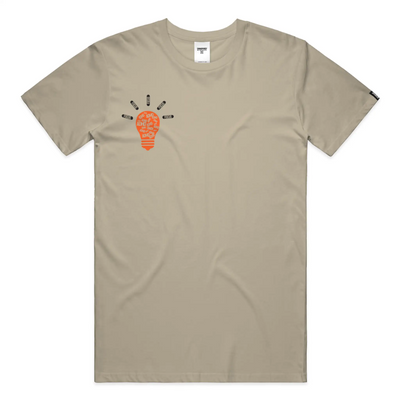
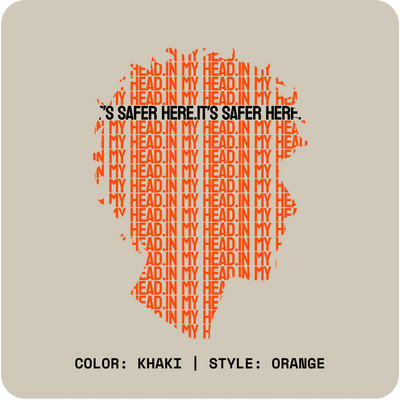
UNINSPIRED makes clothing for the ones who know exactly what they're doing and do it anyway. The I'm Fine collection doesn't pretend you're not coping. Scan the sleeve.