Childhood Trauma: What It Is, What It Isn't, and Why It Shows Up So Much Later

For the ones who didn't think their childhood was bad enough to explain what's happening now.

For the ones who've spent years trying to figure out where certain patterns came from and running out of explanations that fit.

For the ones who are only now, at whatever age they are, piecing together something they weren't given the language for when it was forming.


What Childhood Trauma Is

Childhood trauma is not limited to dramatic, singular events. This is the misconception that prevents the most people from recognizing what they experienced.

Trauma is any experience — or pattern of experiences — that overwhelms a child's ability to cope, and that the nervous system is unable to integrate at the time. The nervous system stores what it can't process. It doesn't forget. It files it in a way that shapes future threat-detection, emotional regulation, relationship patterns, and sense of self.

Single-incident trauma (an accident, a natural disaster, a witnessed event) is what most people picture. Complex or developmental trauma is what many more people have experienced: patterns of instability, emotional unavailability, criticism, inconsistency, neglect, abuse, or chaos that were sustained over time rather than happening once. The nervous system's response to chronic, repeated experiences is different from its response to a single event, and it's often more far-reaching.


What Counts

The research framework most commonly referenced is Adverse Childhood Experiences (ACEs) — ten categories of experiences identified by the CDC that are associated with significant long-term health and mental health outcomes. They include physical, emotional, and sexual abuse; physical and emotional neglect; household dysfunction (domestic violence, substance use, mental illness, incarceration, parental separation).

The ACE framework captures a significant range but doesn't capture everything. Emotional neglect — having your emotional needs consistently unmet, without any dramatic events — doesn't always register as trauma in the person who experienced it, but it shapes the nervous system in ways that show up clearly in adulthood. Growing up in environments of chronic instability, poverty, or threat that didn't involve direct abuse. Having parents who were physically present but emotionally unavailable. These are real and they have effects.


Why It Shows Up Later

Children develop adaptive responses to their environments. If the environment is unsafe, the child adapts to the unsafe environment — develops hypervigilance, people-pleasing, dissociation, numbing, whatever the specific environment selected for. These adaptations are protective and appropriate for the context.

The problem is that the adaptations don't automatically deactivate when the context changes. The nervous system doesn't know, at 24 or 31 or 45, that the original environment is no longer the current environment. It's still running the same threat-detection patterns that were developed in response to a childhood reality that no longer exists.

This is why trauma shows up later in patterns rather than memories. The anxious attachment, the hypervigilance in relationships, the difficulty with authority figures, the hair-trigger response to certain kinds of criticism, the impulse to people-please or to disappear — these are the adaptations, still running.


What the Body Remembers

Trauma is stored somatically — in the body — as much as cognitively. The nervous system holds what the conscious mind doesn't necessarily have access to. This is why trauma responses often feel disproportionate, or happen in the body before the mind registers them: a tightening in the chest, a sudden urgency to leave, a shutdown in the middle of something that shouldn't be threatening.

The body remembered before you did. The response was calibrated to an old environment. The environment changed. The response didn't, because nobody updated the calibration.


Not Revisiting for Its Own Sake

Understanding childhood trauma isn't about assigning blame, staying in the past, or performing victim identity. It's about having an accurate map of why certain patterns exist — which is the only thing that makes it possible to change them.

You can't update a pattern you can't name. You can't interrupt a response you don't recognize as a learned response. The understanding is practical, not sentimental.


For the ones who didn't think what happened to them was bad enough to explain anything — the threshold for what shapes a nervous system is lower than the cultural standard for what counts as trauma. If it was too much for the system you had at the time, it was enough to leave a mark. That's not a complaint. It's a map.


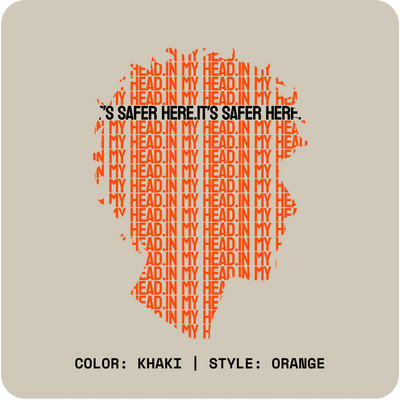
UNINSPIRED makes clothing for the ones who carry things they can't always name. Shop the UNSPOKEN collection. Scan the sleeve.

Childhood Trauma: What It Is, What It Isn't, and Why It Shows Up So Much Later

For the ones who didn't think their childhood was bad enough to explain what's happening now.

For the ones who've spent years trying to figure out where certain patterns came from and running out of explanations that fit.

For the ones who are only now, at whatever age they are, piecing together something they weren't given the language for when it was forming.


What Childhood Trauma Is

Childhood trauma is not limited to dramatic, singular events. This is the misconception that prevents the most people from recognizing what they experienced.

Trauma is any experience — or pattern of experiences — that overwhelms a child's ability to cope, and that the nervous system is unable to integrate at the time. The nervous system stores what it can't process. It doesn't forget. It files it in a way that shapes future threat-detection, emotional regulation, relationship patterns, and sense of self.

Single-incident trauma (an accident, a natural disaster, a witnessed event) is what most people picture. Complex or developmental trauma is what many more people have experienced: patterns of instability, emotional unavailability, criticism, inconsistency, neglect, abuse, or chaos that were sustained over time rather than happening once. The nervous system's response to chronic, repeated experiences is different from its response to a single event, and it's often more far-reaching.


What Counts

The research framework most commonly referenced is Adverse Childhood Experiences (ACEs) — ten categories of experiences identified by the CDC that are associated with significant long-term health and mental health outcomes. They include physical, emotional, and sexual abuse; physical and emotional neglect; household dysfunction (domestic violence, substance use, mental illness, incarceration, parental separation).

The ACE framework captures a significant range but doesn't capture everything. Emotional neglect — having your emotional needs consistently unmet, without any dramatic events — doesn't always register as trauma in the person who experienced it, but it shapes the nervous system in ways that show up clearly in adulthood. Growing up in environments of chronic instability, poverty, or threat that didn't involve direct abuse. Having parents who were physically present but emotionally unavailable. These are real and they have effects.


Why It Shows Up Later

Children develop adaptive responses to their environments. If the environment is unsafe, the child adapts to the unsafe environment — develops hypervigilance, people-pleasing, dissociation, numbing, whatever the specific environment selected for. These adaptations are protective and appropriate for the context.

The problem is that the adaptations don't automatically deactivate when the context changes. The nervous system doesn't know, at 24 or 31 or 45, that the original environment is no longer the current environment. It's still running the same threat-detection patterns that were developed in response to a childhood reality that no longer exists.

This is why trauma shows up later in patterns rather than memories. The anxious attachment, the hypervigilance in relationships, the difficulty with authority figures, the hair-trigger response to certain kinds of criticism, the impulse to people-please or to disappear — these are the adaptations, still running.


What the Body Remembers

Trauma is stored somatically — in the body — as much as cognitively. The nervous system holds what the conscious mind doesn't necessarily have access to. This is why trauma responses often feel disproportionate, or happen in the body before the mind registers them: a tightening in the chest, a sudden urgency to leave, a shutdown in the middle of something that shouldn't be threatening.

The body remembered before you did. The response was calibrated to an old environment. The environment changed. The response didn't, because nobody updated the calibration.


Not Revisiting for Its Own Sake

Understanding childhood trauma isn't about assigning blame, staying in the past, or performing victim identity. It's about having an accurate map of why certain patterns exist — which is the only thing that makes it possible to change them.

You can't update a pattern you can't name. You can't interrupt a response you don't recognize as a learned response. The understanding is practical, not sentimental.


For the ones who didn't think what happened to them was bad enough to explain anything — the threshold for what shapes a nervous system is lower than the cultural standard for what counts as trauma. If it was too much for the system you had at the time, it was enough to leave a mark. That's not a complaint. It's a map.


UNINSPIRED makes clothing for the ones who carry things they can't always name. Shop the UNSPOKEN collection. Scan the sleeve.


0 comments

Leave a comment

Please note, comments must be approved before they are published

Favorites

Our most popular looks of the season

Relevant Product