For the ones who order the same thing every morning not because it's the best option but because it's the one that works.
For the ones who can't start a conversation before a first cup. Who can feel the particular anxiety of an afternoon crash and know it by name.
For the ones who are doing caffeine and coping — and know, somewhere in the background, that these two things are more connected than they usually admit.
What the Caffeine Habit Is Actually Doing
Caffeine is the most widely consumed psychoactive substance in the world. It's also one of the most socially normalized ways to manage a nervous system that isn't keeping up with the demands being placed on it.
Most people don't think of coffee as a coping mechanism. It's a ritual. A preference. Something to hold in your hands before the day decides what it's going to be.
But for a lot of people — particularly those dealing with ADHD, anxiety, chronic stress, burnout, or the specific exhaustion of running on not enough — caffeine isn't just preference. It's maintenance. It's the thing that gets you from here to functional. The difference between existing and operating.
That's what a coping mechanism is.
Caffeine and ADHD
The connection between caffeine and ADHD is more specific than general stimulation.
ADHD is associated with lower dopamine availability in the brain's reward and attention circuits. Stimulant medications — the most common ADHD treatments — work by increasing dopamine and norepinephrine. Caffeine is a mild stimulant that operates on a similar (though much less targeted) pathway.
This is why many people with ADHD, diagnosed or not, find that caffeine does something different for them than it does for other people. It doesn't just wake them up. It helps them focus. It reduces the cognitive noise. It makes the morning manageable in a way that isn't fully explained by "I just like coffee."
Some people discover this intuitively and self-medicate with caffeine for years before understanding what's actually happening neurologically. The habit that looked like preference was actually a workaround.
When It's Coping
There's a difference between drinking coffee because you enjoy it and drinking coffee because you need it to function and you're not entirely sure what would happen if you stopped.
Coping with caffeine looks like:
- Tracking the clock to know when the next cup is acceptable
- Feeling a specific kind of dread when the supply runs out
- Using it to flatten anxiety rather than energy — to stay level when everything is too much
- Drinking it past the point where it helps because stopping feels worse than continuing
- Knowing it's making your sleep worse but doing it anyway because the daytime cost of not having it is higher
None of these are moral failures. They're adaptations. The nervous system found something that helped and built it into the operating routine.
The Anxiety Layer
Caffeine increases heart rate, raises cortisol, and activates the sympathetic nervous system — the same system that runs the stress response. For people already running high — anxious, overstimulated, chronically stressed — caffeine can amplify the baseline rather than provide relief.
Some people with anxiety drink more caffeine because the activation feels like focus. The jitteriness feels like productivity. The elevated heart rate has become so familiar it doesn't register as a warning sign. They're managing anxiety with something that also produces anxiety, and the line between the two states has gotten blurry.
The crash — the afternoon drop in blood sugar and adenosine rebound — can land as depression, irritability, or dread that feels out of proportion to anything that actually happened. This gets attributed to the day, to circumstances, to just how you are. It's also, often, biochemical.
What This Doesn't Mean
It doesn't mean you need to quit coffee. It doesn't mean your habit is a problem. It doesn't mean something is wrong with you for needing what you need to get through the day.
It means: you're not alone in the way you use it. The ritual is real. The reliance is real. The particular texture of needing it in a way that goes beyond taste — that's real too.
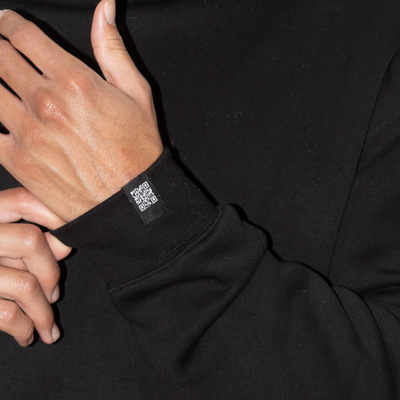
The Caffeine & Coping hoodie is part of the UNSPOKEN collection. Made-to-order. For the ones running on it. Scan the sleeve.