For the ones who need coffee to feel like a person.
For the ones who know their anxiety is worse today and are still on their third cup.
For the ones whose coping mechanism has its own merch.
Why caffeine and coping got linked in the first place
Caffeine is the most widely used psychoactive substance in the world. That fact doesn't get treated with the seriousness it probably deserves — partly because it's legal, largely normalized, and sold in vessels with indie fonts at every corner.
But the relationship between caffeine and mental state is real and complex. And for a specific population — anxious people, ADHD brains, chronically burned-out people running on cortisol and schedule — it's worth understanding what caffeine is actually doing, and why the relationship with it is often less about enjoyment and more about function.
What caffeine actually does to the brain
Caffeine works primarily by blocking adenosine receptors. Adenosine is a neurotransmitter that accumulates throughout the day and signals fatigue — it's essentially the brain's way of telling you it's time to rest. Caffeine slots into those receptors and blocks the signal. You don't become less tired; you stop receiving the information that you're tired.
Simultaneously, caffeine triggers the release of dopamine and adrenaline. The dopamine contribution is modest but real — which is part of why it feels good beyond just the alertness boost. The adrenaline is what produces the physical effects: elevated heart rate, heightened alertness, the sensation of readiness.
For most people in moderate amounts, this is fine. For people whose nervous systems are already running high — through anxiety, through ADHD, through chronic stress — it adds load to a system that may already be at capacity.
ADHD and caffeine: the self-medication question
There's a well-documented pattern of people with undiagnosed ADHD gravitating toward high caffeine consumption. This isn't accidental.
ADHD involves a deficit in dopamine regulation — the system that handles motivation, attention, and task initiation doesn't have reliable access to the dopamine it needs. Stimulant medications work by increasing dopamine availability. Caffeine, as a mild stimulant, does something adjacent: it increases alertness and provides a small dopamine bump that can temporarily close the gap between wanting to focus and being able to.
The effect is inconsistent and less targeted than medication. But for someone who doesn't have a diagnosis or access to treatment, the pattern of discovering that more coffee makes the brain work a bit better isn't irrational. It's unconscious self-medication — reaching for the tool that provides some version of the thing the brain is missing.
Anxiety and caffeine: the loop that makes it worse
Here's the specific problem: anxiety and caffeine produce nearly identical physiological effects. Elevated heart rate. Heightened alertness. Muscle tension. The sensation of being on edge.
When you're anxious and you add caffeine, the nervous system often can't distinguish between the two. The physical signals of anxiety get amplified. The threshold for anxious activation drops. Thoughts that would normally register as background worry become more insistent. The 3am wake-up that had nothing behind it now has the added weight of a nervous system that can't settle.
The paradox: people who are anxious often drink more coffee, not less. Because the fatigue underneath the anxiety is real, and the coffee addresses the fatigue in the short term while making the anxiety worse in the medium term. The loop keeps running.
Coping mechanisms that look like preferences
Coffee has become culturally positioned as personality — as aesthetic, as identity, as the harmless thing you do that makes you relatable. The mug. The order. The joke about not being a person before the first cup.
But for a lot of people, the relationship with caffeine isn't about taste or ritual. It's functional. It's the thing that makes it possible to get through the day in a body that's exhausted, a brain that won't regulate, a system that doesn't have the resources it needs to operate without chemical assistance.
That's a coping mechanism wearing the costume of a preference. And the distinction matters — not because coping mechanisms are shameful, but because understanding what's actually happening opens up the question of whether it's working, what it's costing, and whether there are other tools available.
What it costs
Chronically high caffeine consumption interferes with sleep architecture even when it doesn't prevent sleep onset. It disrupts adenosine signaling in ways that can increase baseline fatigue over time — the very problem it's being used to solve. It can worsen anxiety disorders. It can produce dependency with real withdrawal effects.
None of which means you have to stop. But the cultural joke of "I can't function without my coffee" is, for some people, a description of a dependency that's worth naming accurately before deciding what, if anything, to do about it.
The real question
Not: is caffeine bad? But: what is the caffeine doing, and is that the actual thing that needs addressing?
If it's managing ADHD symptoms without a diagnosis, the caffeine is a symptom of an unmet need. If it's masking exhaustion produced by a schedule that exceeds sustainable capacity, the caffeine is a symptom of a structural problem. If it's holding anxiety at bay by replacing the fatigue underneath with stimulation, the caffeine is a symptom of a cycle that isn't getting interrupted anywhere upstream.
Which is fine to know. The cup doesn't have to go. But knowing what it's doing is different from not knowing.
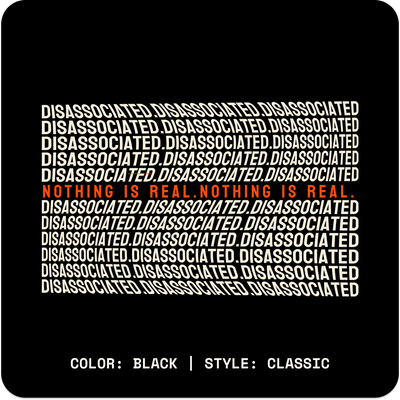
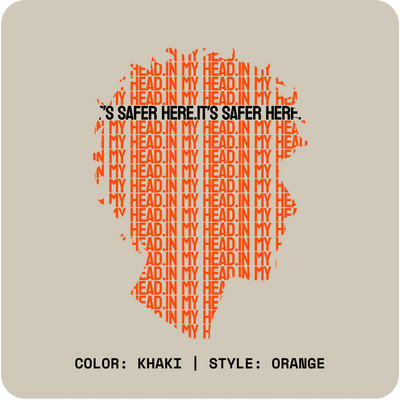
UNINSPIRED makes clothing for the ones who run on caffeine and cope with the rest. The Caffeine & Coping collection names what most people only joke about. Scan the sleeve.