ADHD Time Blindness: Why the Clock Doesn't Work the Same Way

For the ones who looked up and three hours had passed.

For the ones who are always exactly fifteen minutes late and cannot explain it.

For the ones who have been described as bad at time management by people who don't know that time doesn't feel the same to everyone.

What time blindness actually is

Time blindness is the ADHD-associated difficulty perceiving the passage of time accurately — not as a metaphor, but as a genuine perceptual difference in how the brain experiences and tracks temporal information.

The term was developed primarily by Dr. Russell Barkley, who argues that time blindness is one of the most significant and underacknowledged features of ADHD. Where most people have a relatively reliable internal sense of time passing — an awareness that ten minutes has elapsed, that a deadline is approaching, that the space between now and then is shrinking — ADHD brains often don't. Time is less a continuous dimension and more a binary: now or not now.

Now or not now: the ADHD time horizon

For most people, the future is a gradient. Events that are far away feel far away; events that are close feel close. The approach of a deadline creates a gradually escalating sense of urgency that prompts action in proportion to proximity.

For ADHD brains, the future exists largely in a single category — not now. A deadline that's three weeks away and a deadline that's three months away both live in "later," with a similar non-urgency. The gradient doesn't function the same way. What's not immediate isn't felt as approaching. It's just: not here yet.

This is why the urgency arrives so suddenly. Not because the person forgot — they often didn't — but because the deadline was in "not now" until it became "right now," and there was no felt gradation between the two. One moment there was time. The next, there wasn't. The clock didn't stop working. The internal sense of the clock was structured differently all along.

Hyperfocus and the time warp

Time blindness in ADHD goes both directions. Time doesn't feel like it's passing when a task is engaging enough to produce hyperfocus.

Hyperfocus is the intense, absorbed attention that ADHD brains can bring to certain tasks — often things that are genuinely interesting, novel, high-stakes, or emotionally relevant. During hyperfocus, the external world recedes. Other inputs — hunger, discomfort, the awareness that it's been three hours — don't register the same way. The internal clock, which was already unreliable, essentially stops reporting.

This produces the experience of looking up to find that what felt like forty-five minutes was four hours. And its obverse: the experience of being interrupted from deep engagement and being unable to explain why it's so disorienting — because the transition out of hyperfocus isn't just a shift of attention. It's the sudden reappearance of time, external reality, and all the things that accumulated during the absence.

Why ADHD lateness isn't rudeness

People with ADHD are frequently late. This gets interpreted as disrespect, disorganization, or not caring enough about the other person to be on time.

The actual mechanism: the transition to departure requires a complex sequence of time-based estimations that the ADHD brain doesn't perform reliably. How long will it take to get ready? How long is the drive? How much buffer is needed? These calculations require both accurate time perception and the ability to project forward into a future that, for ADHD brains, often doesn't feel as real as the present moment.

The consistent pattern of arriving fifteen minutes late doesn't reflect a fixed decision. It reflects a brain that consistently underestimates how long preparation takes, overestimates how much time is available, and doesn't feel the approach of departure time in a way that would produce the right preparatory behavior at the right moment.

The shame accumulation

Time blindness is one of those ADHD features that generates enormous social friction and very little understanding. Because it looks, from the outside, like a choice. Like not caring. Like chronic disrespect.

The accumulation of being repeatedly misread — as irresponsible, as careless, as not valuing other people's time — produces shame that often persists long after strategies have been found that work around the issue. The strategies help the behavior. They don't necessarily touch the shame that came from years of being read wrong.

What actually helps

External structure substituted for the internal structure that doesn't reliably operate. Multiple alarms. Visible clocks. Time-stamped planning that works backward from deadlines rather than forward from the present. Building in more buffer than seems necessary, and then building in more again.

Not willpower. Not caring more. Systems that make the passage of time visible and concrete, because the internal mechanism for tracking it isn't providing accurate data.


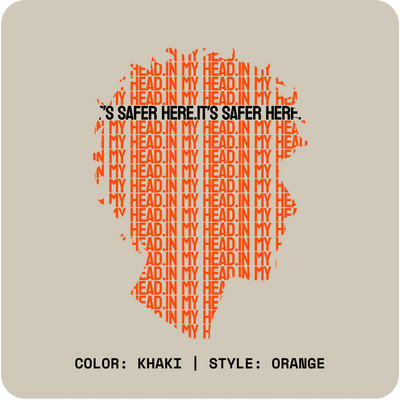
UNINSPIRED makes clothing for the ones whose brain runs on different time. The ADHD collection names what most people file as a character flaw. Scan the sleeve.

ADHD Time Blindness: Why the Clock Doesn't Work the Same Way

For the ones who looked up and three hours had passed.

For the ones who are always exactly fifteen minutes late and cannot explain it.

For the ones who have been described as bad at time management by people who don't know that time doesn't feel the same to everyone.

What time blindness actually is

Time blindness is the ADHD-associated difficulty perceiving the passage of time accurately — not as a metaphor, but as a genuine perceptual difference in how the brain experiences and tracks temporal information.

The term was developed primarily by Dr. Russell Barkley, who argues that time blindness is one of the most significant and underacknowledged features of ADHD. Where most people have a relatively reliable internal sense of time passing — an awareness that ten minutes has elapsed, that a deadline is approaching, that the space between now and then is shrinking — ADHD brains often don't. Time is less a continuous dimension and more a binary: now or not now.

Now or not now: the ADHD time horizon

For most people, the future is a gradient. Events that are far away feel far away; events that are close feel close. The approach of a deadline creates a gradually escalating sense of urgency that prompts action in proportion to proximity.

For ADHD brains, the future exists largely in a single category — not now. A deadline that's three weeks away and a deadline that's three months away both live in "later," with a similar non-urgency. The gradient doesn't function the same way. What's not immediate isn't felt as approaching. It's just: not here yet.

This is why the urgency arrives so suddenly. Not because the person forgot — they often didn't — but because the deadline was in "not now" until it became "right now," and there was no felt gradation between the two. One moment there was time. The next, there wasn't. The clock didn't stop working. The internal sense of the clock was structured differently all along.

Hyperfocus and the time warp

Time blindness in ADHD goes both directions. Time doesn't feel like it's passing when a task is engaging enough to produce hyperfocus.

Hyperfocus is the intense, absorbed attention that ADHD brains can bring to certain tasks — often things that are genuinely interesting, novel, high-stakes, or emotionally relevant. During hyperfocus, the external world recedes. Other inputs — hunger, discomfort, the awareness that it's been three hours — don't register the same way. The internal clock, which was already unreliable, essentially stops reporting.

This produces the experience of looking up to find that what felt like forty-five minutes was four hours. And its obverse: the experience of being interrupted from deep engagement and being unable to explain why it's so disorienting — because the transition out of hyperfocus isn't just a shift of attention. It's the sudden reappearance of time, external reality, and all the things that accumulated during the absence.

Why ADHD lateness isn't rudeness

People with ADHD are frequently late. This gets interpreted as disrespect, disorganization, or not caring enough about the other person to be on time.

The actual mechanism: the transition to departure requires a complex sequence of time-based estimations that the ADHD brain doesn't perform reliably. How long will it take to get ready? How long is the drive? How much buffer is needed? These calculations require both accurate time perception and the ability to project forward into a future that, for ADHD brains, often doesn't feel as real as the present moment.

The consistent pattern of arriving fifteen minutes late doesn't reflect a fixed decision. It reflects a brain that consistently underestimates how long preparation takes, overestimates how much time is available, and doesn't feel the approach of departure time in a way that would produce the right preparatory behavior at the right moment.

The shame accumulation

Time blindness is one of those ADHD features that generates enormous social friction and very little understanding. Because it looks, from the outside, like a choice. Like not caring. Like chronic disrespect.

The accumulation of being repeatedly misread — as irresponsible, as careless, as not valuing other people's time — produces shame that often persists long after strategies have been found that work around the issue. The strategies help the behavior. They don't necessarily touch the shame that came from years of being read wrong.

What actually helps

External structure substituted for the internal structure that doesn't reliably operate. Multiple alarms. Visible clocks. Time-stamped planning that works backward from deadlines rather than forward from the present. Building in more buffer than seems necessary, and then building in more again.

Not willpower. Not caring more. Systems that make the passage of time visible and concrete, because the internal mechanism for tracking it isn't providing accurate data.


UNINSPIRED makes clothing for the ones whose brain runs on different time. The ADHD collection names what most people file as a character flaw. Scan the sleeve.


0 comments

Leave a comment

Please note, comments must be approved before they are published

Favorites

Our most popular looks of the season

Relevant Product