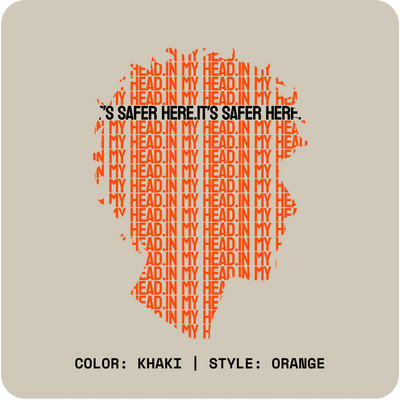
For the ones who can't start the thing because it might not be perfect — and can't stop the thing because it's still not perfect enough.
For the ones who are hours into a task they were supposed to finish in twenty minutes.
For the ones whose to-do list looks like a graveyard of things they were too afraid to get wrong.
Why ADHD and Perfectionism Seem Like Opposites
From the outside, they look like they cancel each other out. ADHD: disorganized, scattered, impulsive. Perfectionism: precise, exacting, high-standard. The combination doesn't seem to make sense.
Inside the experience, it makes complete sense. ADHD doesn't mean you don't care about quality. Often, it means you care intensely — and the caring becomes its own obstacle. The fear of producing something flawed is large enough to stop you from producing anything at all. The paralysis isn't laziness. It's a perfectionism response filtered through an executive function system that doesn't have the regulatory brakes to manage it.
What ADHD Perfectionism Actually Is
Not the same as the kind of perfectionism that produces meticulous, high-quality work consistently. ADHD perfectionism is closer to a threat response. The nervous system registers imperfection as danger — as something that will confirm the worst things you believe about yourself, expose you, cost you something real.
For people with ADHD, this often has roots in a history of performance-based criticism. Years of hearing "you're not living up to your potential." Years of work that was objectively good enough being dismissed because the process was visible — because you forgot the thing, turned it in late, hyperfocused on the wrong part. When good output consistently wasn't enough to protect you from criticism, the logic becomes: it has to be perfect, or it counts as failure. And if it has to be perfect and I can't guarantee perfect, then I can't start.
Task Initiation and the Blank Page Problem
ADHD affects dopamine systems in the brain — specifically the systems that regulate motivation, reward, and the ability to start tasks that don't have immediate, compelling feedback. Starting something from scratch is neurologically hard. Add perfectionism on top and the blank page becomes a wall.
This is where ADHD paralysis lives. Not laziness — a genuine inability to initiate when the task feels high-stakes and imperfection feels catastrophic. The brain is trying to start and simultaneously trying to guarantee a perfect outcome before a single word is written, a single stroke is made, a single step is taken. Those two operations conflict with each other. The conflict produces nothing.
Then the time passes. The window closes or shrinks. Now you're also managing the shame of not starting — which adds weight to the task. Which makes starting harder. The spiral is familiar to anyone who lives with ADHD perfectionism: the task gets heavier the longer you don't do it.
Hyperfocus as Perfectionism's Other Face
ADHD perfectionism doesn't only look like avoidance. It also looks like hyperfocus — the lock-in state where the ADHD brain fully engages and the world disappears. In perfectionism's hands, hyperfocus becomes the inability to stop. The task is never done because done means submitting it to judgment. So you keep going. Fixing. Adjusting. Refining. One more pass.
This is the other side of the trap: not being able to start, or not being able to stop. Both driven by the same underlying fear. The task has to be right before it can leave your hands.
Hours later, you've either produced something that's genuinely over-engineered for the stakes involved, or you've gone so deep that you've lost perspective entirely and you can no longer tell if it's good or not. Exhausted. Late. Still not sure it's good enough.
The Shame Layer
ADHD perfectionism comes packaged with shame in ways that make it harder to address. If you didn't start, you tell yourself it's because you're lazy — not because starting felt genuinely impossible. If you didn't finish, you tell yourself it's because you have no discipline — not because the completion trigger in your nervous system requires external deadline pressure that hasn't arrived yet.
The shame narrative hides the actual mechanism. And as long as the story is "I'm lazy" or "I'm a mess," the actual pattern — the perfectionism-paralysis loop — keeps running unchallenged.
What also lives here: the gap between potential and output. People with ADHD are often acutely aware of the gap between what they're capable of in ideal conditions and what they actually produce. That awareness is painful. And the pain gets attributed to character — to something being wrong with them — rather than to the specific, addressable mechanics of how their brain works.
What Actually Helps
Lowering the stakes of starting. Not the whole task — just the first gesture. A draft that's allowed to be bad. A first sentence that's going to change. Five minutes instead of two hours. The goal isn't to eliminate the perfectionism; it's to make starting a smaller act than the perfectionism requires it to be.
External accountability. ADHD task initiation responds to social pressure and external deadlines in ways it doesn't respond to internal motivation alone. Working alongside someone. Sending a draft to someone who gets that it's a draft. Creating a deadline that has actual consequences. The environment does the regulatory work the internal system can't do on its own.
And naming the pattern. The difference between "I didn't do it because I'm failing" and "I didn't do it because the perfectionism-paralysis loop was running" is the difference between shame and information. Information you can work with.
UNINSPIRED makes clothing for the ones running on a different operating system. The ADHD collection is for the ones who know exactly what they're capable of — and find that knowledge complicated. Scan the sleeve.